Di Pacci NZ · Buying Guide

Great espresso doesn’t have to mean spending five figures. This guide covers the best value and entry-level coffee machines at Di Pacci NZ for 2026 — from the most affordable way into proper espresso, through capable Italian semi-automatics you can grow with, to a one-touch automatic bean-to-cup option for anyone who’d rather skip the learning curve.

MD
By Mik Di Pacci
Founder & CEO, Di Pacci Coffee Company · Updated 2026
  • Under $2,000 options
  • 58mm portafilters
  • PID control
  • Italian made
  • Grow-with-you
  • Expert advice · 09 9779924

What “value” really means in an espresso machine

At the accessible end of the market, value isn’t about being the cheapest — it’s about which features are genuinely worth paying for and which you can do without for now. Three things separate a machine you’ll keep for years from one you’ll outgrow in months: a commercial 58mm portafilter, a quality boiler material (stainless steel or brass rather than aluminium), and ideally PID temperature control for consistent shots.

Every machine in this guide is built around those fundamentals. Some ask you to compromise on workflow — a single boiler means waiting briefly between brewing and steaming — but none compromise on the parts that determine how your coffee actually tastes, or on the standard that lets you add precision accessories later.

Quick comparison

Machine Type Boiler / Temp Portafilter Best for
Flair 58+ Manual lever None — manual 58mm baskets Cheapest genuine espresso
Lelit Anna PID Semi-automatic Single boiler + PID 58mm commercial Best under $2,000
Lelit Anita PID Semi-automatic Single boiler + PID 58mm commercial Step-up from the Anna
Quick Mill Pippa Semi-automatic Single boiler Semi-pro group Stylish under $2,000
Nuova Simonelli Oscar II Semi-automatic Heat exchanger 58mm commercial Best value step-up
Saeco Aurora M1 Bean-to-cup automatic Built-in grinder One-touch convenience
Cheapest genuine espresso
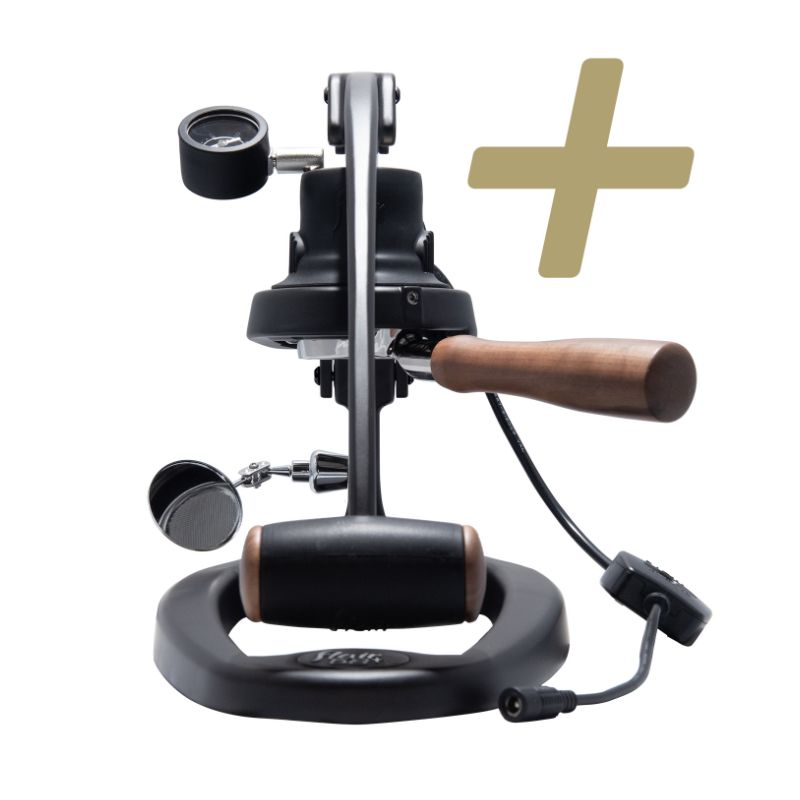
Flair 58+ manual lever espresso maker

Flair 58+

Manual lever · 58mm baskets · Portable

The Flair 58+ is the most affordable way into real espresso with professional 58mm components. There’s no boiler, pump or electronics — you heat water separately and generate the pressure by hand with the lever, which gives direct tactile feedback and complete control over the shot. It ships with both high- and low-flow baskets, walnut accents and a detachable preheat controller.

Because it’s a manual lever, there’s almost nothing to maintain and nothing to go wrong. It’s compact and fully portable, so it works at home, at the bach, or anywhere you can boil water. There’s a learning curve and you’ll need a kettle, but for the money the level of control is remarkable.

Di Pacci verdict: The lowest-cost route to genuine espresso with commercial 58mm baskets. Ideal for purists, minimalists and anyone who wants to learn the fundamentals hands-on.
  • Type: Manual lever
  • Basket: 58mm commercial
  • Extras: High & low-flow baskets
  • Portability: Fully portable
View the Flair 58+ →
Best under $2,000
Lelit Anna PID espresso machine

Lelit Anna PID

Semi-automatic · Single boiler · PID · Made in Italy

The Anna PID (PL41TEMD) is the machine to look at when you want a genuine step up from appliance-tier equipment while staying under $2,000. Made in Italy with a stainless steel body, a commercial 58mm portafilter and a built-in PID controller, it delivers real prosumer capability in a compact footprint.

That 58mm portafilter is the key upgrade over cheaper machines — it’s the café standard, so it opens access to precision baskets, tampers and accessories. The built-in PID means temperature is dialled in from day one, taking the guesswork out of consistency. It’s a single boiler, so you wait briefly between brewing and steaming, but it’s a machine you can grow with for years.

Di Pacci verdict: Our pick for the best Italian-made machine under $2,000. PID plus a 58mm portafilter at this price is a strong combination — beginner-friendly, but with room to develop your skills. Pair it with a quality grinder for a complete setup.
  • Boiler: Single boiler, stainless
  • Portafilter: 58mm commercial
  • Temperature: PID
  • Origin: Made in Italy
View the Lelit Anna PID →
The step-up
Lelit Anita PL42TEMD espresso machine

Lelit Anita PID

Semi-automatic · Single boiler · PID · Made in Italy

The Anita (PL42TEMD) is the natural next step from the Anna for buyers who want a little more machine while keeping the same easy single-boiler-plus-PID approach. It shares the Italian build quality, polished stainless steel finish and commercial 58mm portafilter, in a package aimed at home baristas ready to invest a bit more up front.

Like the Anna, it uses a single boiler with PID temperature control, so it’s straightforward to live with and dials in consistency from the start — a sensible choice if you want headroom above entry level without moving into heat-exchanger pricing.

Di Pacci verdict: A tidy step up from the Anna with the same beginner-friendly single-boiler PID formula and commercial 58mm portafilter. Good for buyers who want a little more machine from the outset.
  • Boiler: Single boiler + PID
  • Portafilter: 58mm commercial
  • Finish: Polished stainless steel
  • Origin: Made in Italy
View the Lelit Anita PID →
Stylish under-$2,000 alternative
Quick Mill Pippa stainless steel espresso machine

Quick Mill Pippa

Semi-automatic · Single boiler · Stainless steel · Made in Italy

The Quick Mill Pippa is a compact Italian-made single-boiler machine that keeps the price under $2,000 while looking the part in stainless steel. It pairs a semi-professional group with a 1.8-litre water tank and a 0.45-litre boiler, giving you a genuine espresso machine with a clean, understated design at an accessible price.

It’s a straightforward single-boiler setup — you wait briefly between brewing and steaming — which keeps things simple to learn and live with. For a buyer who wants an Italian machine with real presence on the bench without stretching the budget, it’s an appealing alternative to the Lelit pair.

Di Pacci verdict: A stylish, keenly priced Italian single boiler for under $2,000. A good option if you like its stainless-steel look and want a simple, capable machine to start out on.
  • Boiler: Single boiler, 0.45L
  • Group: Semi-professional
  • Water tank: 1.8 L
  • Origin: Made in Italy
View the Quick Mill Pippa →
Best value step-up
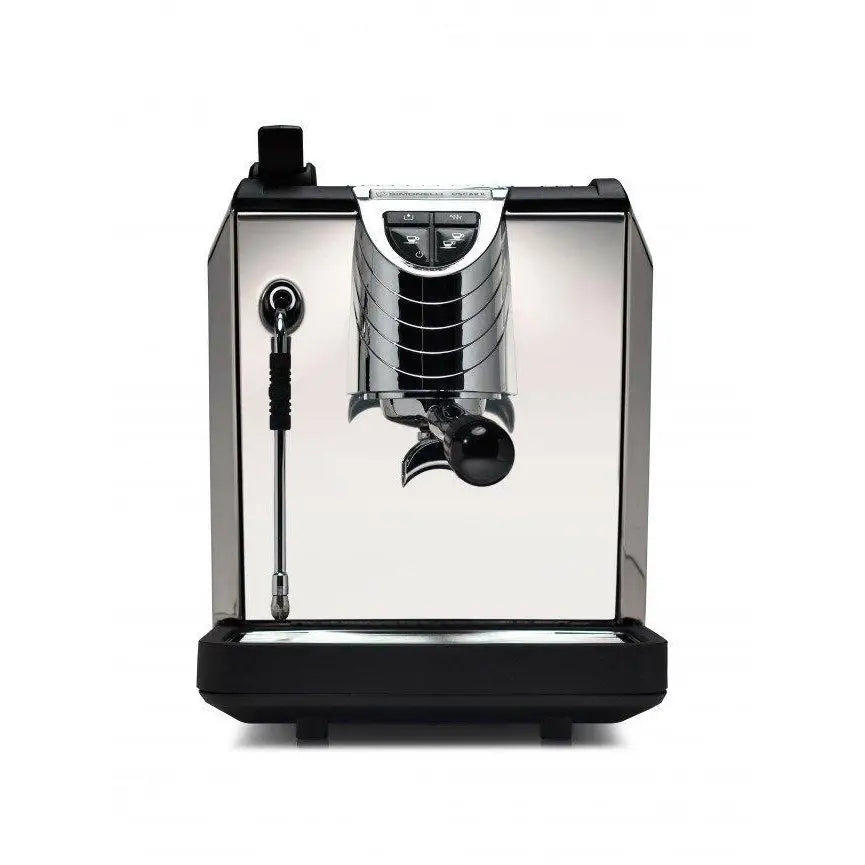
Nuova Simonelli Oscar II espresso machine

Nuova Simonelli Oscar II

Semi-automatic · Heat exchanger · 58mm · Made in Italy

The Oscar II is the value pick for buyers ready to step up from a single boiler. It packs heat-exchanger technology into a compact stainless-steel body, so you can brew and steam at the same time — no waiting between a shot and texturing milk. It uses a commercial 58mm group and Nuova Simonelli’s thermocompensation system to hold group temperature steady shot to shot, from the company that supplies the official World Barista Championship machine.

At just 32cm wide it stays compact, runs from a removable tank (or can be plumbed in), and its strong steam wand handles several milk drinks in a row. It sits a little above the strict budget bracket, but for the features it packs in it’s one of the best-value heat-exchanger machines around.

Di Pacci verdict: The step-up choice for milk-drink households who don’t want to wait between shot and steam. Commercial 58mm group, heat-exchanger workflow and championship-machine heritage make it exceptional value above entry level.
  • Boiler: Heat exchanger
  • Portafilter: 58mm commercial
  • Water: Removable tank or plumbed
  • Origin: Made in Italy
View the Nuova Simonelli Oscar II →
Best automatic option
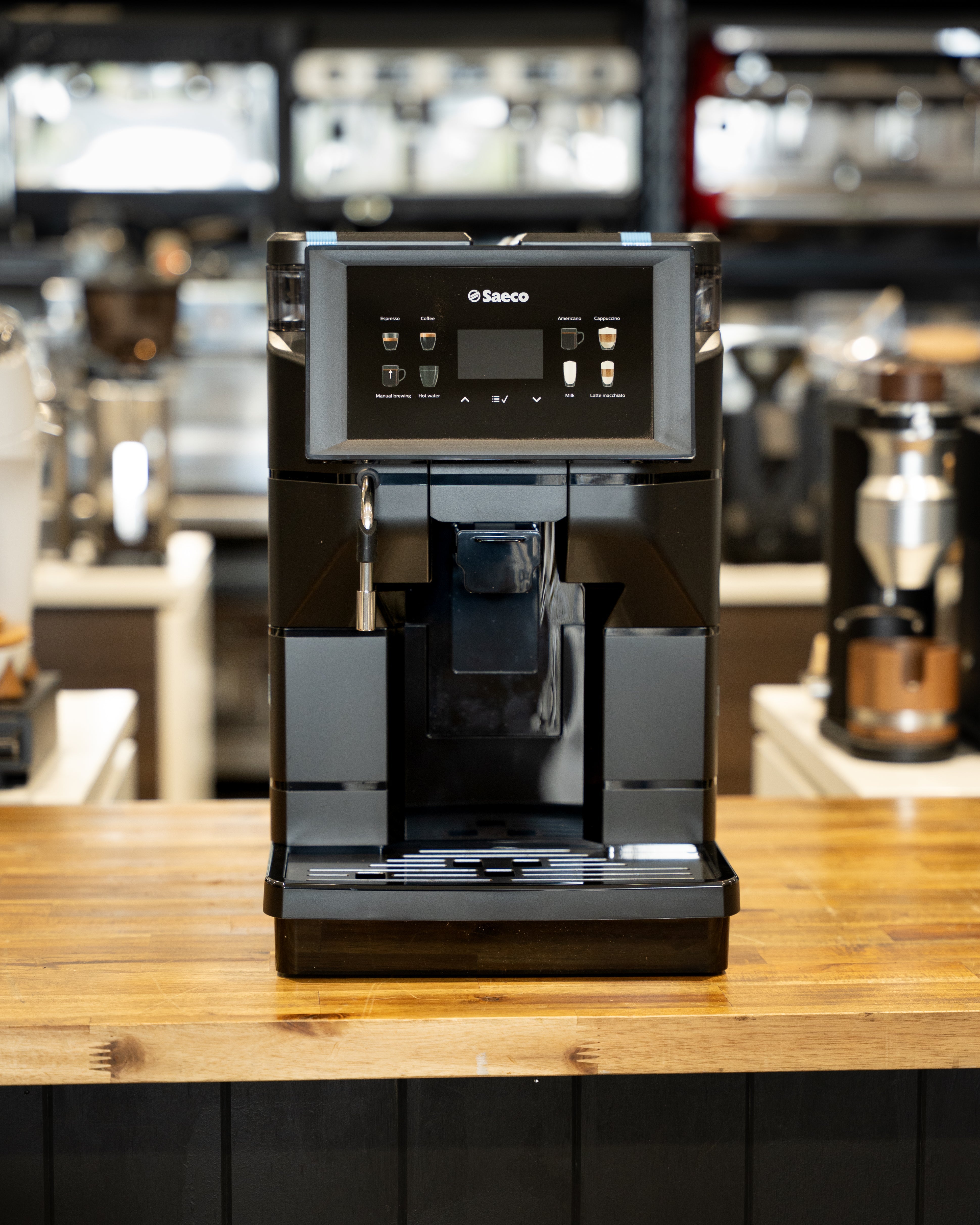
Saeco Aurora M1 fully automatic bean-to-cup coffee machine

Saeco Aurora M1

Bean-to-cup · One-touch milk · Built-in grinder

If you’d rather skip the learning curve altogether, the Aurora M1 is the automatic option. It’s a compact bean-to-cup machine that grinds, doses, brews and (through its automatic milk frother) textures milk at the touch of a button — with a one-touch cappuccino and latte macchiato function. Steel conical burrs, eight grind levels and seven aroma settings mean you still get fresh-ground coffee, without any manual technique.

Because it grinds internally, there’s no separate grinder to buy, which offsets some of the higher up-front price versus a semi-automatic. With a 2.5-litre tank and 600g bean hopper in a 280mm-wide body, it suits a household or small team that wants consistent milk drinks with zero effort.

Di Pacci verdict: The pick if convenience matters more than hands-on control. One-touch milk drinks and a built-in grinder make it the easiest machine here to live with — and there’s no extra grinder to budget for.
  • Type: Bean-to-cup automatic
  • Grinder: Built-in, steel burrs
  • Milk: Automatic, one-touch
  • Water tank: 2.5 L
View the Saeco Aurora M1 →

What to look for (and what to skip)

Look for: a 58mm portafilter

58mm is the commercial café standard. A machine with a 58mm portafilter opens access to precision baskets, tampers, distribution tools and bottomless portafilters — the accessories that help you refine extraction as your skills grow. Every machine in this guide uses it.

Look for: PID temperature control

PID holds the brew temperature to a tight, repeatable target instead of letting it drift. On single-boiler and heat-exchanger machines especially, that means more consistent shots with far less guesswork — one of the most worthwhile features at this end of the market.

Look for: a solid boiler material

Stainless steel and brass boilers hold heat well and last. They’re a big part of why a well-chosen entry machine can serve for many years, so it’s worth prioritising build materials over cosmetic features.

Sensible trade-off: single boiler

At this level, a single boiler is a reasonable compromise — you wait briefly between brewing and steaming, which is fine for one or two drinks at a time at home. If you make lots of milk drinks back-to-back, that’s the cue to look at a heat exchanger like the Nuova Simonelli Oscar II, which brews and steams at the same time.

Comparing across the whole range? See our best home coffee machines in NZ guide for dual-boiler and premium options, or if convenience is the priority, our fully automatic coffee machines guide. You can also browse the full home coffee machines range.

Don’t forget the grinder

A quality grinder matters as much as the machine — inconsistent grinding undermines even a well-built espresso machine. It’s worth budgeting for a good burr grinder alongside whichever machine you choose, rather than treating it as an afterthought. Our companion guide to the best coffee grinders in NZ covers the pairings that make the biggest difference, or browse the full home coffee grinders range.

Frequently asked questions

What’s the best coffee machine under $2,000 in NZ?
Among the machines in this guide, the Lelit Anna PID is our pick under $2,000 — it’s Italian-made with a built-in PID and a commercial 58mm portafilter. If you want the lowest-cost route into genuine espresso, the manual-lever Flair 58+ comes in below it. Both use the 58mm standard, so you can add precision accessories over time.
Why does a 58mm portafilter matter so much?
58mm is the commercial café standard. Choosing a machine with a 58mm portafilter opens access to the full range of precision baskets, tampers, distribution tools and bottomless portafilters — the accessories that let you refine extraction as you improve. Machines with smaller, non-standard portafilters limit your upgrade options later.
Do I need PID at this price?
It’s one of the most worthwhile features at the entry level. PID holds the brew temperature to a consistent target, so your shots are more repeatable with less technique. The Lelit Anna and Anita both include it; the Quick Mill Pippa keeps things simpler at a lower price, and the Flair 58+, being a manual lever, gives you temperature control through how you heat and manage your water instead.
Single boiler or heat exchanger for a first machine?
For most first-time buyers making one or two drinks at a time, a single boiler (like the Anna, Anita or Pippa) is a sensible, affordable choice — you just wait briefly between brewing and steaming. If you regularly make several milk drinks in a row, a heat exchanger like the Nuova Simonelli Oscar II lets you brew and steam simultaneously, which is worth the step up.
Do I still need to buy a grinder?
For the espresso machines here — the Flair 58+, Lelit Anna, Anita, Quick Mill Pippa and Nuova Simonelli Oscar II — yes, you’ll need a separate burr grinder, as none has one built in. Grind consistency has a huge effect on the cup, so it’s worth budgeting for a good one alongside the machine. The one exception is the Saeco Aurora M1, which is a bean-to-cup automatic with a built-in grinder, so no separate grinder is needed. See our grinder guide for pairings.
Is a manual, semi-automatic or automatic machine right for me?
It comes down to how hands-on you want to be. A manual lever (Flair 58+) gives total control and the lowest cost. A semi-automatic (Lelit Anna, Anita, Quick Mill Pippa, Nuova Simonelli Oscar II) lets you dial in and pull your own shots with a separate grinder — the classic home-barista route. An automatic bean-to-cup (Saeco Aurora M1) grinds and brews at the push of a button with no technique required. If convenience is the priority, see our dedicated fully automatic coffee machines guide for more options.

Not sure which entry machine is right?

Tell us your budget and whether you make milk drinks, and our team can point you to the best value machine and grinder pairing for your setup.

Talk to our team →