Di Pacci NZ — Buying Guide — New Zealand
Updated 2026 · By Mik Di Pacci, Founder & CEO, Di Pacci Coffee Company · Expert buying guide & reviews
The best home coffee machine in New Zealand depends on your budget, how hands-on you want to be, and the drinks you make most. Best overall: the La Marzocco Linea Mini — commercial dual-boiler technology at home. Best value: the Rancilio Silvia Pro X — true dual-boiler performance. Best under the prosumer tier: the Lelit Anna PID — Italian build with a 58mm portafilter and PID. Best automatic: the Saeco SE180 bean-to-cup. And remember — pair any machine with a quality grinder to get the best from it.
☕ Espresso to Bean-to-CupManual, dual boiler & automatic
⚙️ 58mm & E61Commercial-standard groups & portafilters
🎯 PID & Dual BoilerTemperature stability for better shots
📞 Expert AdviceCall our specialists — 09 9779924
📋 In this guide
- Why your machine choice matters
- Questions to ask before you buy
- Our top picks — reviewed
- Full comparison table
- Dual boiler vs heat exchanger vs single boiler
- Don't forget the grinder
- Frequently asked questions
Why Your Machine Choice Matters
A home espresso machine is a long-term buy, so it pays to match it to how you actually make coffee. The big decisions are the boiler type (which controls whether you can brew and steam at once, and how stable your temperature is), whether it has PID temperature control, and whether the group and portafilter are the commercial 58mm / E61 standard — because that standard opens the door to the full range of precision baskets, tampers and accessories.
Just as important: the grinder. A brilliant machine can’t rescue unevenly ground coffee, so it’s worth budgeting for a quality grinder alongside the machine rather than treating it as an afterthought. More on that below.
Questions to Ask Before You Buy
How hands-on do you want to be? If you enjoy the ritual and want full control, a manual lever (Flair 58+) or a prosumer semi-automatic (Lelit Anna, Rancilio Silvia Pro X) rewards the effort. If you want café-style drinks at the touch of a button with no learning curve, a super-automatic bean-to-cup like the Saeco SE180 is the better fit.
Do you steam milk, and how often? Flat whites, lattes and cappuccinos back-to-back point toward a dual boiler or heat exchanger, which brew and steam at the same time. A single boiler (like the Anna PID) is perfectly capable but asks you to wait between pulling a shot and steaming.
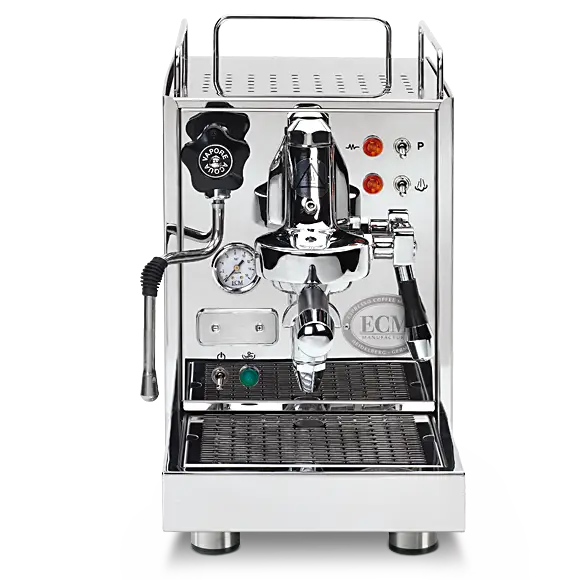
What’s your space and budget? Compact kitchens are well served by narrow machines like the ECM Classika PID. Budget-wise, genuine capability starts at the entry prosumer tier and climbs to commercial-grade at the top. Browse the full home coffee machines range to compare current models and pricing in NZD.
Our Top Picks — Best Home Coffee Machines 2026
Every machine below is part of Di Pacci’s New Zealand range. Recommendations are based on build quality, temperature stability, workflow and real-world performance across espresso and milk drinks.
🏆 Best Overall — Commercial Quality at Home
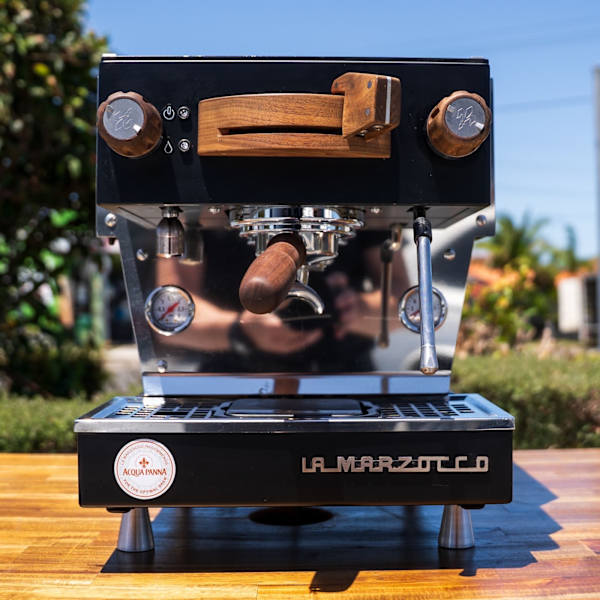
La Marzocco Linea Mini
Dual Boiler · Saturated Group · Dual PID · Made in Italy
The Linea Mini brings La Marzocco’s commercial café technology into a home-sized machine. Handcrafted in Italy, it uses the same saturated group-head design found in professional Linea machines, which is the key to its exceptional temperature stability — the water is actively circulated around the brew head, so the shot temperature barely moves from one pour to the next.
The dual boiler gives independent control of brew and steam, and dual PID controllers hold temperature tightly. It’s a serious investment, but it’s built for decades of daily use and delivers genuinely commercial performance at home.
Di Pacci verdict: The machine to buy if you want the best and have the budget. Temperature stability rivals full-size commercial machines, and the build quality is made to last. Available in a range of colours to suit your kitchen.
-
Boiler: Dual boiler, saturated group
-
Portafilter: 58mm commercial
-
Temperature: Dual PID
-
Origin: Handcrafted in Italy
View the La Marzocco Linea Mini →
💎 Best Value — Dual Boiler Performance
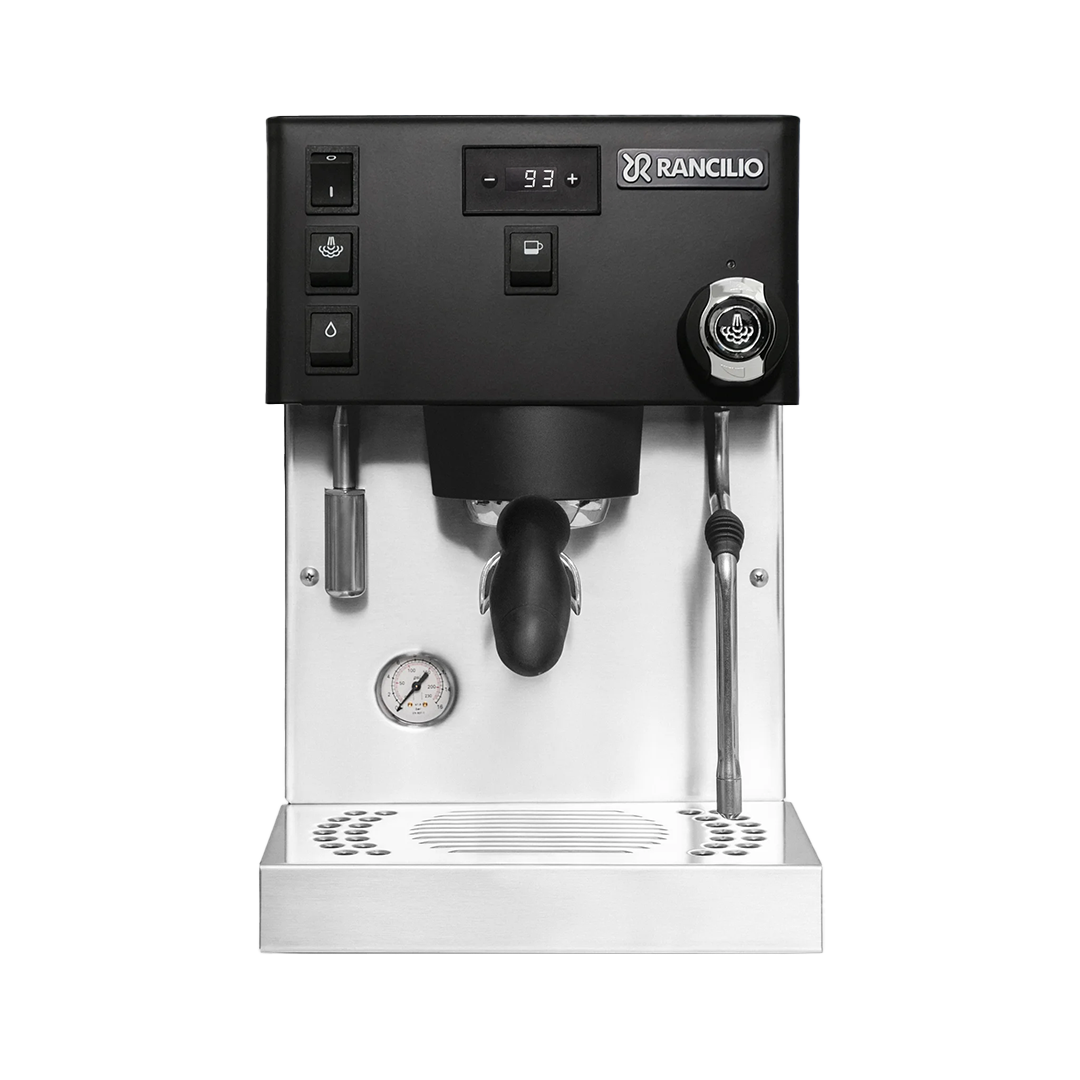
Rancilio Silvia Pro X
Dual Boiler · Dual PID · 58mm · Made in Italy
The Silvia Pro X brings genuine dual-boiler performance to a far more accessible price point. Building on the long-running Silvia reputation, the Pro X adds two boilers and dual PID control, so you can brew and steam at the same time with no waiting — a workflow that usually costs a lot more. The commercial 58mm portafilter accepts the full range of aftermarket baskets and accessories.
Stainless steel construction throughout, variable soft pre-infusion and a shot timer round it out. The design is understated rather than showy, but the performance-to-price ratio is hard to beat.
Di Pacci verdict: Outstanding value with commercial-grade components. Dual-boiler workflow that rivals machines costing considerably more. The sweet spot between features and price for intermediate to advanced home baristas.
-
Boiler: Dual boiler, independent
-
Portafilter: 58mm commercial
-
Temperature: Dual PID + shot timer
-
Origin: Made in Italy
View the Rancilio Silvia Pro X →
🎖️ Best Entry Prosumer

Lelit Anna PID
Semi-Automatic · Single Boiler · PID · Made in Italy
The Anna PID is the machine to look at when you want a real step up from appliance-tier equipment without reaching prosumer dual-boiler pricing. Made in Italy with a stainless steel body, a commercial 58mm portafilter and a built-in PID controller, it delivers genuine prosumer capability in a compact footprint.
That 58mm portafilter is the critical upgrade over cheaper machines — it’s the café standard, so you get access to precision baskets, tampers and accessories. The built-in PID means temperature is dialled in from day one, taking the guesswork out of consistency. It’s a single boiler, so you wait briefly between brewing and steaming, but it’s a machine you can grow with for years.
Di Pacci verdict: Excellent Italian-made value at the entry prosumer level. PID plus a 58mm portafilter at this price is a strong combination, and it’s beginner-friendly while leaving plenty of room to develop your skills. Pair it with a quality grinder for a complete setup.
-
Boiler: Single boiler, stainless
-
Portafilter: 58mm commercial
-
Temperature: PID
-
Origin: Made in Italy
View the Lelit Anna PID →
🎨 Best Design — Iconic Italian Craftsmanship
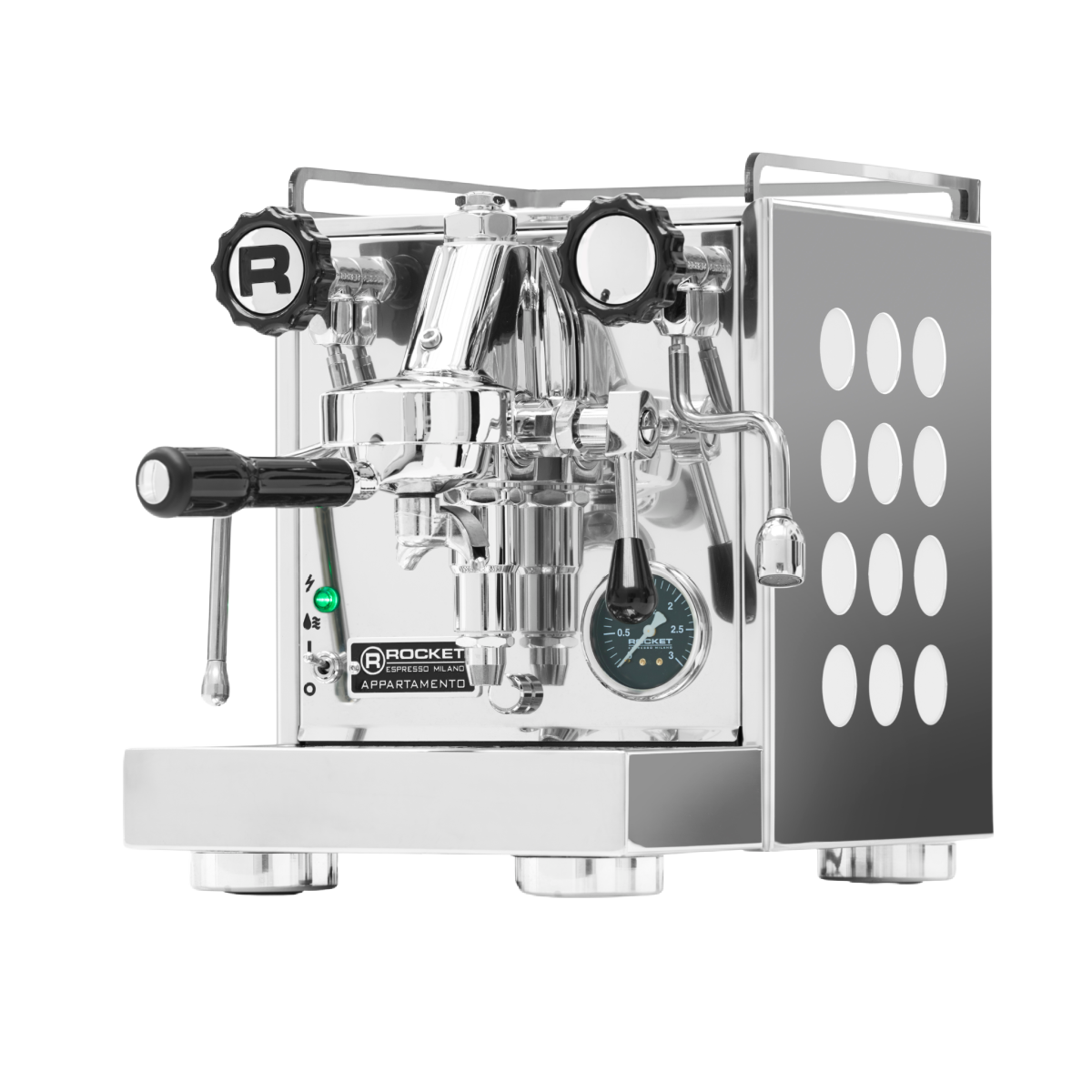
Rocket Appartamento
Heat Exchanger · E61 Group · 58mm · Made in Italy
The Appartamento pairs striking Italian design with proven E61 heat-exchanger technology. Handcrafted in Milan with polished stainless steel and its distinctive cut-out side panels, it’s as much a kitchen centrepiece as a serious machine. The E61 group has been a commercial standard for decades, and the heat-exchanger design lets you brew and steam at the same time without the cost of a dual boiler.
It runs a commercial 58mm E61 portafilter with passive pre-infusion. There’s no PID, so it rewards a little temperature-management technique, but the payoff is classic E61 espresso character in a genuinely beautiful package.
Di Pacci verdict: The pick when design matters as much as performance. Gorgeous Italian craftsmanship, proven E61 technology, and simultaneous brew-and-steam. A statement piece that also makes excellent coffee.
-
Boiler: Heat exchanger
-
Group: E61 commercial
-
Portafilter: 58mm
-
Origin: Handcrafted in Milan
View the Rocket Appartamento →
🤖 Best Automatic — Bean-to-Cup Convenience
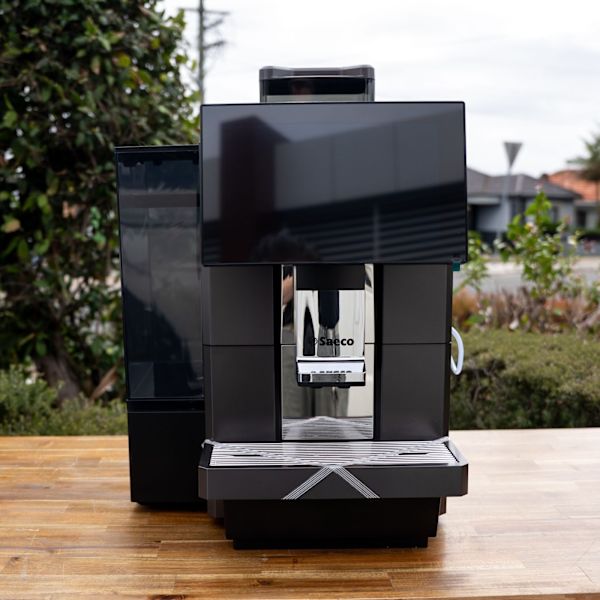
Saeco SE180
Super-Automatic · Bean-to-Cup · One-Touch · Built-in Grinder
The SE180 is the answer for households that want café-style drinks without the manual learning curve. It’s a super-automatic bean-to-cup machine with a built-in ceramic grinder and one-touch operation — it grinds, doses, brews and (with the automatic milk system) froths at the push of a button. Consistent results every time, with minimal effort or technique required.
The compact footprint suits residential kitchens, and it’s ideal where several people want different drinks quickly. You trade away manual control and the ability to use custom baskets, but for pure convenience it’s excellent.
Di Pacci verdict: Best automatic choice for busy households that value convenience. One-touch operation is perfect for multiple users, and the automatic milk system makes cappuccinos and lattes effortless.
-
Type: Super-automatic bean-to-cup
-
Grinder: Built-in ceramic
-
Operation: One-touch
-
Milk: Automatic frother
View the Saeco SE180 →
📏 Best Compact — German Engineering
ECM Classika PID
Heat Exchanger · E61 Group · PID · Made in Germany
The Classika PID delivers German engineering precision in a notably narrow package, making it one of the more space-efficient E61 machines while keeping full commercial capability. It runs a heat-exchanger boiler with PID temperature control — the PID takes away much of the traditional heat-exchanger temperature guesswork — along with a commercial E61 group and 58mm portafilter.
Meticulous German build quality and a quiet rotary pump make it a machine built for the long haul, ideal for smaller kitchens that still want serious performance.
Di Pacci verdict: The pick for compact kitchens that don’t want to compromise. German build quality made to last, PID control for stability, and a quiet rotary pump — full E61 capability in a narrow footprint.
-
Boiler: Heat exchanger
-
Group: E61 commercial
-
Temperature: PID
-
Origin: Made in Germany
View the ECM Classika PID →
✋ Best Manual — Pure Lever Control
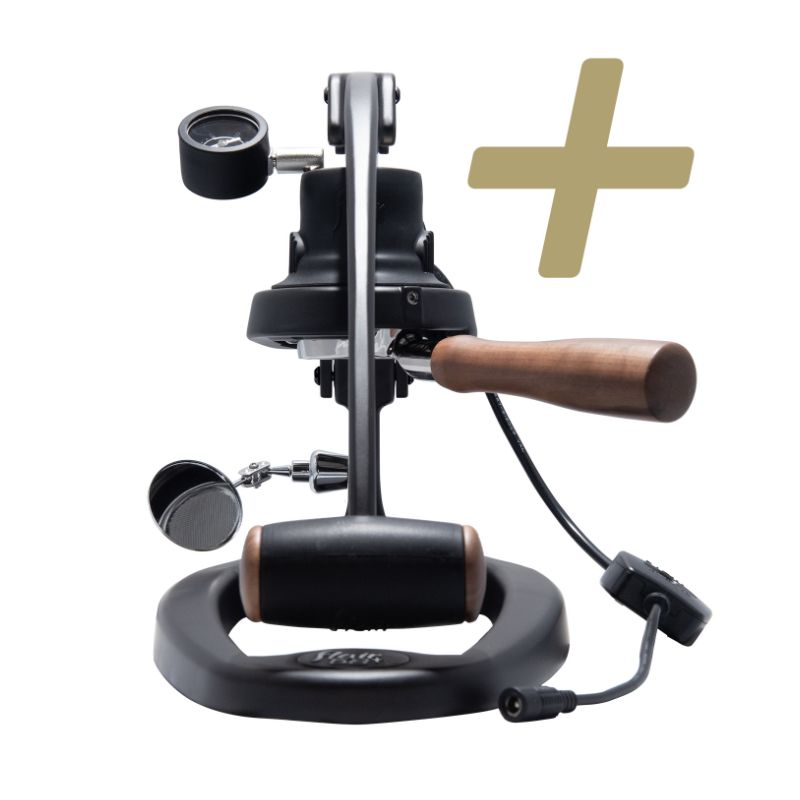
Flair 58+
Manual Lever · 58mm Baskets · Portable
The Flair 58+ delivers pure manual lever espresso with professional 58mm commercial components. You generate the pressure by hand, which gives direct tactile feedback and full control over the shot — and because it’s a manual lever, there’s no complex machinery to maintain. Standard 58mm basket compatibility means access to precision baskets, and it ships with both high- and low-flow baskets, walnut accents and a detachable preheat controller.
It’s compact and portable, so it works at home, at the bach, or wherever you can heat water. There’s a learning curve and you’ll need a separate kettle, but for purists and travellers the level of control and portability is hard to match at the price.
Di Pacci verdict: The choice for purists who want maximum control and portability. The manual lever teaches espresso fundamentals through direct pressure feedback, and 58mm compatibility opens up professional accessories.
-
Type: Manual lever
-
Basket: 58mm commercial
-
Extras: High & low-flow baskets
-
Portability: Fully portable
View the Flair 58+ →
Full Comparison Table
| Machine |
Boiler Type |
Group / Portafilter |
Best For |
Origin |
| La Marzocco Linea Mini |
Dual boiler + PID |
Saturated, 58mm |
Serious enthusiasts |
Italy |
| Rancilio Silvia Pro X |
Dual boiler + PID |
58mm commercial |
Best value dual boiler |
Italy |
| Lelit Anna PID |
Single boiler + PID |
58mm commercial |
Entry prosumer |
Italy |
| Rocket Appartamento |
Heat exchanger |
E61, 58mm |
Design lovers |
Italy |
| Saeco SE180 |
Bean-to-cup |
Built-in grinder |
Convenience |
— |
| ECM Classika PID |
Heat exchanger + PID |
E61, 58mm |
Small kitchens |
Germany |
| Flair 58+ |
Manual lever |
58mm baskets |
Hands-on control |
— |
Explore the full home coffee machines range, or if you’re fitting out a café, step up to commercial coffee machines.
Dual Boiler vs Heat Exchanger vs Single Boiler
Single Boiler
One boiler handles brewing and steaming in turn. Pros: affordable, compact, simple, and with PID (like the Anna) very consistent for espresso. Cons: you wait between pulling a shot and steaming milk, so it’s slower for milk drinks back-to-back.
Best for: first prosumer machine, espresso-focused, smaller budgets.
Heat Exchanger (E61)
A single boiler with a heat exchanger lets you brew and steam at the same time. Pros: simultaneous brew and steam without dual-boiler cost, classic E61 character. Cons: without PID it needs a little temperature technique.
Best for: milk drinks, E61 style, buyers who like some ritual (Rocket, ECM).
Dual Boiler
Separate boilers for brew and steam, each independently controlled. Pros: the best temperature stability and no waiting between shot and steam; dual PID dials it in precisely. Cons: costs more and takes more space.
Best for: serious home baristas and milk-drink households (Silvia Pro X, Linea Mini).
Super-Automatic
A bean-to-cup machine grinds, doses, brews and froths automatically. Pros: one-touch convenience, no technique, consistent, great for multiple users. Cons: no manual control, can’t use custom baskets.
Best for: convenience-first households wanting café drinks fast (Saeco SE180).
Don’t Forget the Grinder
A quality grinder matters as much as the machine itself — inconsistent grinding undermines even the best espresso machine. Whichever machine you choose (except the bean-to-cup Saeco, which grinds internally), budget for a good burr grinder to go with it. Our companion guide to the best coffee grinders in NZ walks through the options, or browse the full home coffee grinders range.
Ready to choose your machine?
Whether you’re buying your first espresso machine or upgrading to commercial-grade, Di Pacci NZ has the right machine — backed by expert advice. Call our specialists on 09 9779924.
Shop all home machines → Contact us
Frequently Asked Questions
What is the best home coffee machine in New Zealand in 2026?
For the best overall, the La Marzocco Linea Mini delivers commercial dual-boiler performance with a saturated group and dual PID. For value, the Rancilio Silvia Pro X offers true dual-boiler performance at a far more accessible price. At the entry prosumer level, the Lelit Anna PID pairs a 58mm portafilter with PID control, and for pure convenience the Saeco SE180 bean-to-cup makes café-style drinks at the touch of a button.
Do I need a separate grinder?
For every manual and semi-automatic machine here — the Linea Mini, Silvia Pro X, Anna PID, Appartamento, Classika PID and Flair 58+ — yes, a quality burr grinder is essential. Pre-ground coffee goes stale quickly and undermines extraction. The only exception is the Saeco SE180, which has a built-in grinder. See our guide to the best coffee grinders in NZ for pairings.
What’s the difference between single boiler, heat exchanger and dual boiler?
A single boiler brews and steams in turn, so you wait between the two — simple and affordable, and very consistent with PID. A heat exchanger lets you brew and steam simultaneously from one boiler, delivering classic E61 character. A dual boiler uses separate boilers for brew and steam, giving the best temperature stability and no waiting, at a higher price. Your choice comes down to how many milk drinks you make and your budget.
What does PID temperature control actually do?
PID holds the brew temperature to a tight, repeatable target rather than letting it swing. In practice that means more consistent shots with less guesswork — particularly valuable on single-boiler and heat-exchanger machines, where temperature would otherwise drift. Machines like the Lelit Anna PID and ECM Classika PID have it built in.
Why does a 58mm portafilter matter?
58mm is the commercial café standard. Choosing a machine with a 58mm portafilter opens access to the full range of precision baskets (like VST and IMS), tampers, distribution tools and bottomless portafilters — the accessories that help you refine extraction. Every espresso machine in this guide uses the 58mm standard.
MD
About the author
Mik Di Pacci
Founder & CEO, Di Pacci Coffee Company
Mik Di Pacci founded Di Pacci Coffee Company in 2010, starting with a single coffee cart in Marrickville, Sydney and growing it into a specialist coffee-machine and grinder business that now serves customers across Australia, New Zealand and beyond. He has spent more than two decades in coffee — roasting, servicing equipment and helping home baristas and cafés choose the right gear. For advice on the right machine for your setup, explore the home coffee machines range or call the Di Pacci NZ team on 09 9779924.