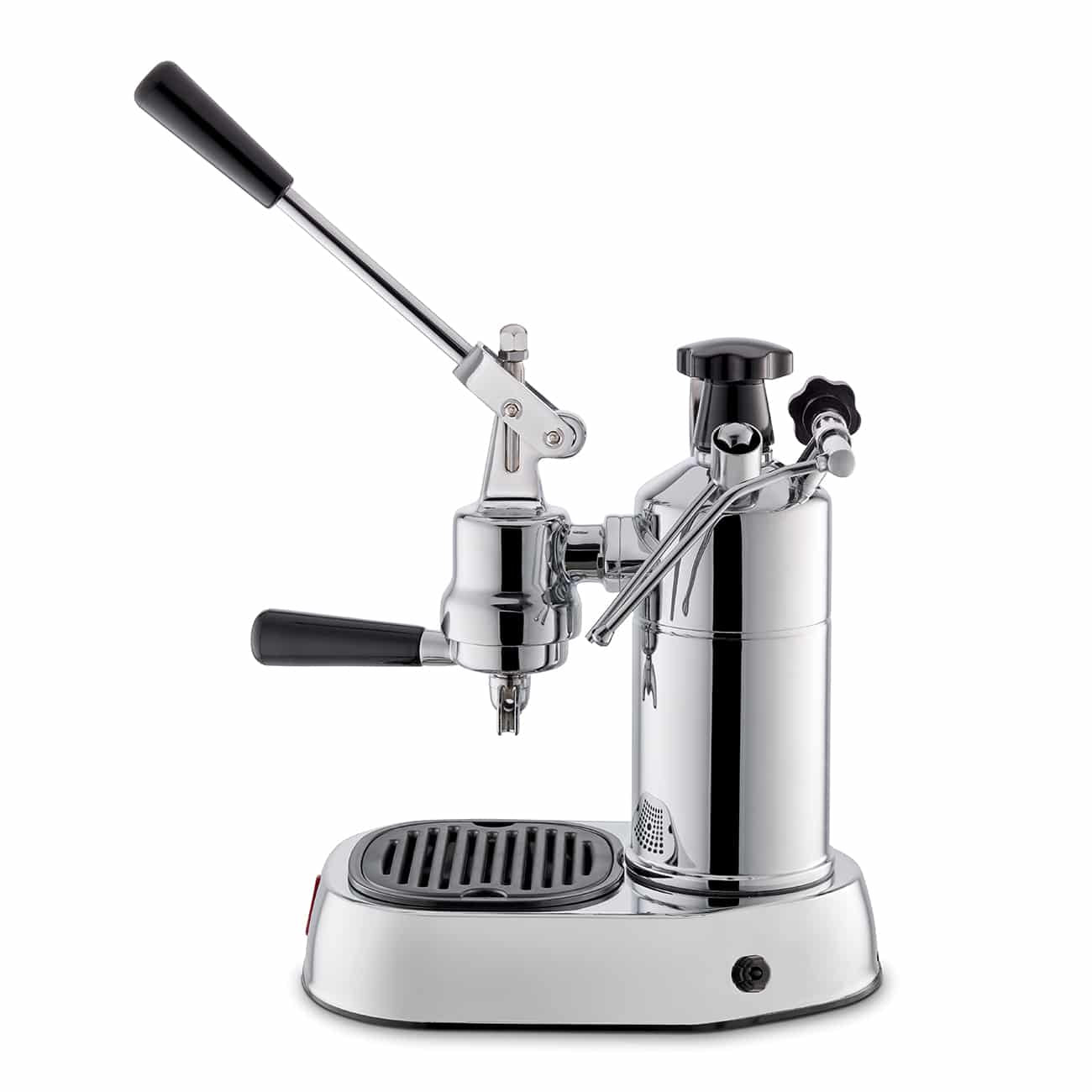
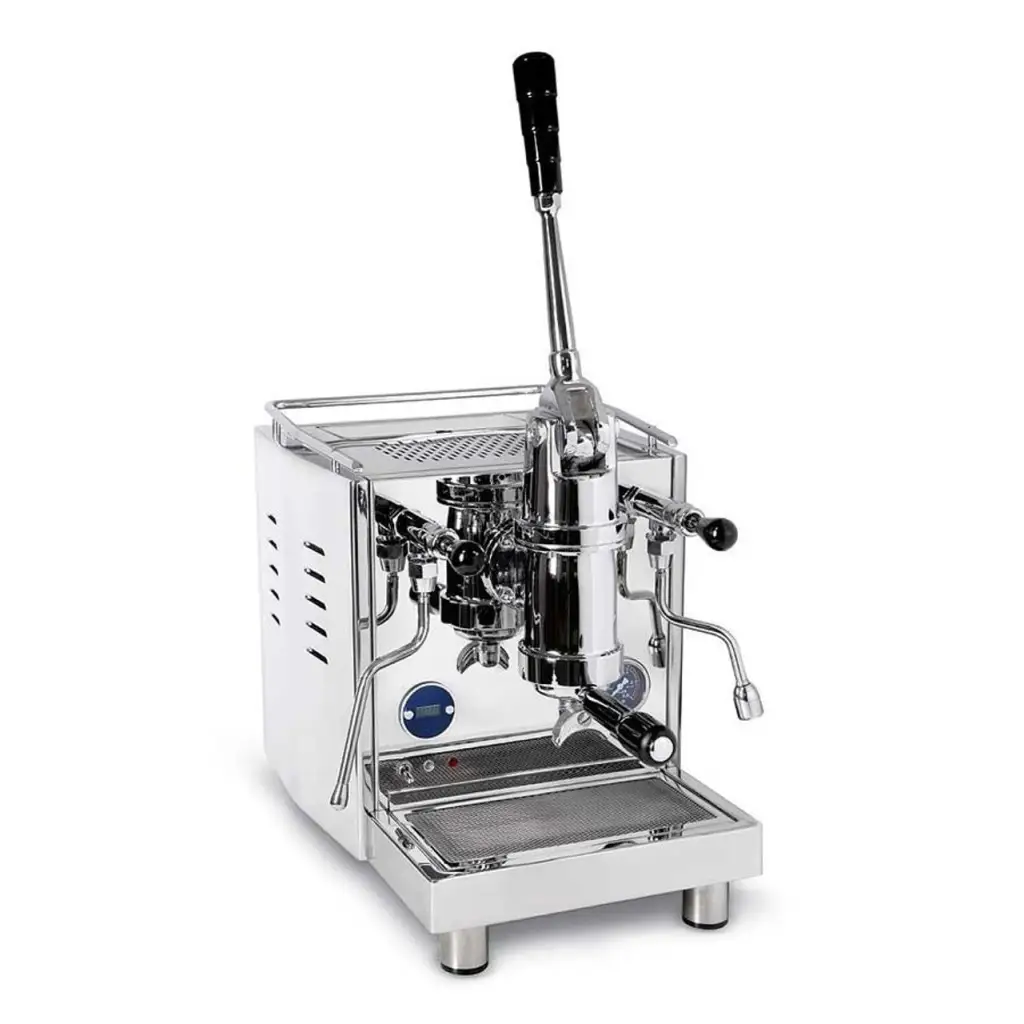
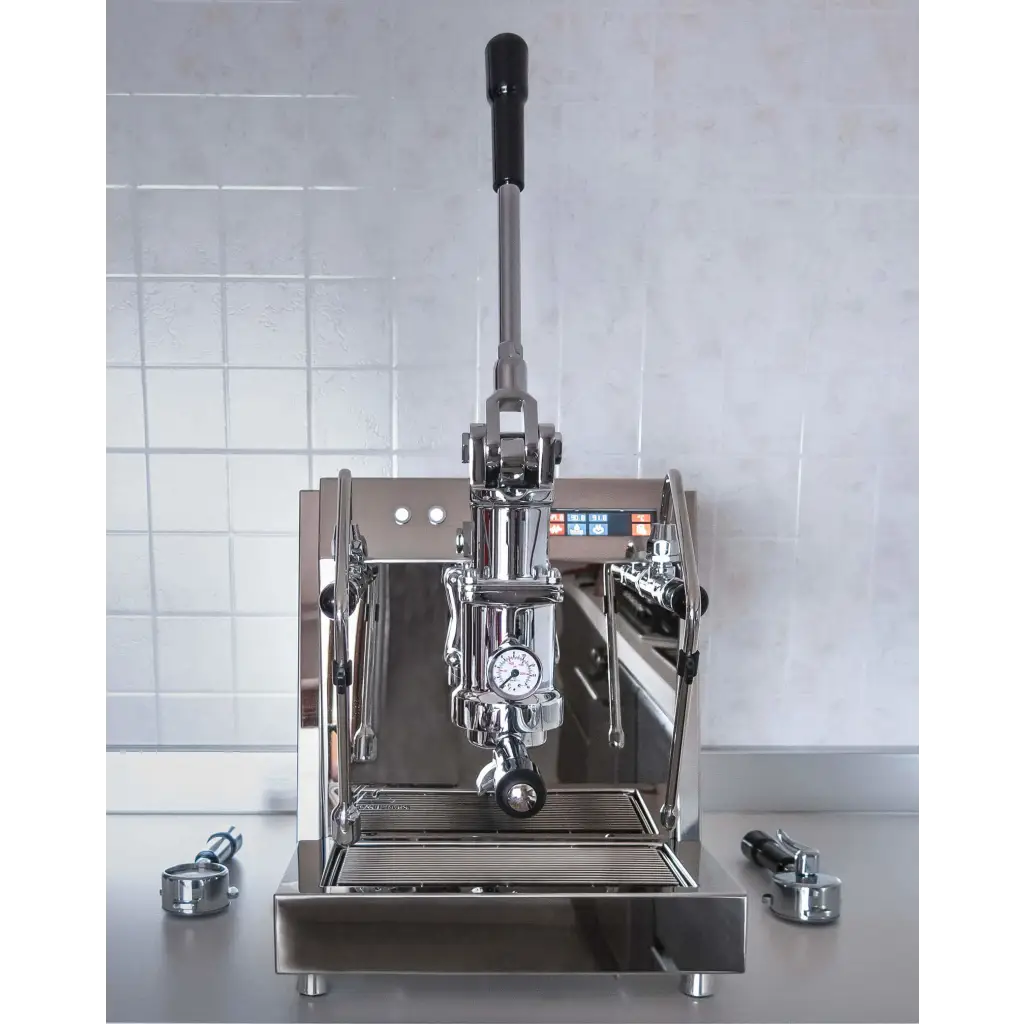
A lever espresso machine pulls a shot using a lever and a spring or your own arm to create brewing pressure, rather than an electric pump. There are two main types: manual (direct) lever machines, where you push the lever and control pressure by hand, and spring lever machines, where you lift the lever to load a spring that then presses the water through the coffee at a naturally declining pressure. Lever machines are prized for their tactile ritual, quiet operation and the smooth pressure curve that can produce a distinctive, sweet shot. This guide explains how lever machines work, their pros and cons, and the real options Di Pacci stocks in New Zealand.
By Mik Di Pacci, Founder and CEO, Di Pacci Coffee Company. Technical explanations are general; machine prices and details are drawn from live product listings and no personal lab testing is claimed.
Quick Summary
What a lever machine is: An espresso machine that uses a lever, with a spring or your arm, to create pressure instead of an electric pump.
Two types: Manual (direct) lever, where you control pressure by hand, and spring lever, where a spring delivers a naturally declining pressure curve.
Best for: Hands-on enthusiasts who enjoy the ritual, want a quiet machine, and value the smooth pressure profile lever shots can give.
Consider: A learning curve, manual effort, and often a premium price for spring lever machines.
NZ options: From the portable Flair GO to La Pavoni manual levers and premium spring levers like the Quick Mill Rapida and ACS Vesuvius Evo Leva.
2 typesManual + Spring
No pumpLever Pressure
QuietOperation
From $461NZD
In this guide
How lever machines work
Manual vs spring lever
Why choose a lever machine
Pros and cons
Are they good for beginners?
Lever machines at Di Pacci NZ
What you need alongside
FAQs
How Lever Espresso Machines Work
A lever espresso machine creates brewing pressure mechanically instead of with an electric pump. When you operate the lever, you either push water through the coffee directly with your arm, or you compress a spring that then pushes the water through as it releases. In both cases the group is fed hot water from a boiler, and the lever provides the force that a pump provides on a conventional machine.
The result is a pressure profile that typically peaks and then declines smoothly through the shot, rather than holding a flat 9 bar. Many people describe this declining curve as producing a sweet, well-balanced espresso, which is a big part of the appeal.
Manual vs Spring Lever
The two lever types feel quite different to use. The table summarises them, and each is explained below.
Feature
Manual (direct) lever
Spring lever
How pressure is made
Your arm, directly on the lever
A spring you load by lifting the lever
Pressure profiling
Fully hands-on, you shape the curve
Consistent declining curve from the spring
Learning curve
Higher; technique-dependent
Moderate; the spring does the work
Typical price
Lower entry point
Often premium
Feel
Maximum control and ritual
Repeatable, classic lever shot
Examples
Flair GO, La Pavoni
Quick Mill Rapida, ACS Vesuvius Evo Leva
Manual (direct) lever
On a manual lever machine you provide the pressure with your arm, so you directly shape the pre-infusion and the pressure through the shot. This gives maximum control and the most hands-on ritual, but it is technique-dependent and takes practice to get consistent. Portable manual levers like the Flair are also popular for travel and for learning espresso fundamentals.
Spring lever
On a spring lever machine you lift the lever to compress a spring, then release it, and the spring pushes the water through the coffee at a naturally declining pressure. This gives the classic lever pressure curve with more repeatability than a manual lever, which is why spring levers are popular with enthusiasts who want the lever experience without shaping every shot by arm. They are typically the more premium option.
Why Choose a Lever Machine?
People choose lever machines for a mix of experience and results. The declining pressure profile can produce a distinctive, sweet shot that many find hard to replicate on a pump machine. Lever machines are also quiet, since there is no vibration pump, and they have a timeless mechanical appeal and ritual that pump machines do not match. For some, the hands-on process is the whole point.
The trade-off is that lever machines ask more of the user. They involve physical effort, a learning curve, and, in the case of spring levers, often a higher price. If you want push-button convenience, a lever machine is not the right tool. If you want to slow down and engage with each shot, it can be deeply rewarding.
Pros and Cons
Pros
Distinctive, often sweeter shots from the declining pressure curve.
Quiet operation with no vibration pump.
Hands-on ritual and mechanical appeal.
Manual levers can be very affordable and portable.
Spring levers give a repeatable classic profile.
Cons
Learning curve, especially on manual levers.
Physical effort to pull each shot.
Spring lever machines are often premium priced.
Less convenient than pump or automatic machines.
Still needs a good separate grinder.
Are Lever Machines Good for Beginners?
Lever machines can suit beginners who are keen to learn, but they are not the easiest starting point. A portable manual lever like the Flair GO is an affordable, low-risk way to learn espresso fundamentals and understand pressure and extraction. A traditional boiler lever such as a La Pavoni has more ritual and a steeper learning curve. If you want the simplest path to milk drinks with less technique, a pump machine such as a home coffee machine may serve you better to start.
Lever Machines at Di Pacci NZ
Di Pacci stocks lever machines across the range, from portable manual units to premium spring levers. Prices are indicative; check each product page for current pricing.
Like any espresso machine, a lever machine needs a good grinder to perform. Pair it with a capable espresso grinder that adjusts finely, and use fresh coffee beans. A quality tamper and consistent technique matter even more on a lever, where you are shaping the shot yourself. For grinder background, see the grinder guide, and for pump machine designs read our dual boiler vs heat exchanger explainer.
A lever espresso machine uses a lever, powered by a spring or your arm, to create the pressure that brews espresso, instead of an electric pump. The group is fed hot water from a boiler and the lever provides the brewing force.
What is the difference between a manual and spring lever machine?
On a manual (direct) lever you create pressure with your arm and shape the shot by hand. On a spring lever you lift the lever to load a spring, which then pushes the water through at a naturally declining pressure. Spring levers are more repeatable; manual levers give more control.
Do lever machines make better coffee?
They make a distinctive coffee. The declining pressure curve of a lever shot is often described as sweet and well-balanced. Whether it is better is a matter of taste, and results still depend heavily on your grinder, beans and technique.
Are lever machines hard to use?
They have a learning curve, especially manual levers, and they require physical effort. Spring levers are a little easier because the spring delivers the pressure. Neither is a push-button appliance.
Are lever machines good for beginners?
They can be, if you enjoy learning. A portable manual lever like the Flair GO is an affordable way to learn espresso fundamentals. For the easiest path to milk drinks, a pump machine may suit a beginner better.
Do lever machines need electricity?
Boiler lever machines use electricity to heat water, but the brewing pressure comes from the lever, not a pump. Some portable manual levers are heated with water you supply and need no power for pressure.
Do I still need a grinder for a lever machine?
Yes. Lever machines do not include a grinder, and grind quality matters as much as on any espresso machine. Pair a lever with a good espresso grinder that adjusts finely.
Are lever machines quieter than pump machines?
Yes. Because there is no vibration pump, lever machines are notably quiet in operation, which is one of their appeals.
Can lever machines steam milk?
Most boiler lever machines have a steam wand for milk drinks. Portable manual levers focused on espresso may not, so check the specific model if milk texturing matters to you.
How much do lever machines cost in NZ?
Di Pacci stocks lever machines from the portable Flair GO at $461.99 NZD to premium spring levers such as the ACS Vesuvius Evo Leva at $10,578.99 NZD. Check each product page for the current price.
Prices and specifications may change. Always confirm current price, availability and specifications on the live product pages before purchasing. Technical explanations are general and no independent laboratory testing is claimed.
Choosing a selection results in a full page refresh.