2Grinding mechanisms
2Adjustment styles
Manualor electric power
#1Factor in cup quality
1. Why the grinder matters more than you think
It's tempting to put most of your budget into the espresso machine and treat the grinder as an afterthought. In practice, grind consistency has an outsized effect on extraction — an uneven grind means some particles over-extract while others under-extract in the same shot, and no amount of machine tuning can fully compensate for that. A modest machine paired with a genuinely good grinder will usually out-brew an expensive machine fed by a poor one.
2. Burr vs. blade grinders
Burr grinders
Crush beans between two burrs — either flat or conical — producing a consistent, adjustable particle size. This consistency is what makes even extraction possible, which is why burr grinders are the standard for espresso and are strongly recommended for pour over, drip, and French press as well.
Blade grinders
Chop beans with a spinning blade, producing a mix of fine dust and larger chunks in the same batch. They're inexpensive and fine for occasional drip coffee if that's genuinely all you need, but the uneven particle size makes them a poor match for espresso, where consistency matters most.
●
Bottom line: if you're serious about espresso, a burr grinder isn't optional — it's the single biggest upgrade available to your setup. Browse our
home coffee grinder range, all burr-based.
3. Stepped vs. stepless adjustment

Stepped adjustment
Fixed click-stop positions — the Baratza Encore ESP, for example, has 40 settings. Easy to return to a known setting reliably, though the jump between one click and the next can sometimes feel coarser than you'd like when fine-tuning espresso.
View Baratza grinders →

Stepless adjustment
Infinite micrometric adjustment, as on the Eureka Mignon Specialita — lets you dial in a grind size with much finer precision than clicks allow. The trade-off is it can be trickier to return to an exact previous setting without noting it down.
View Eureka grinders →
Neither is objectively better — stepped suits people who want a simple, repeatable setting once they've dialled in a bean; stepless suits people who enjoy fine-tuning and are chasing a specific extraction.
4. Manual vs. electric grinders
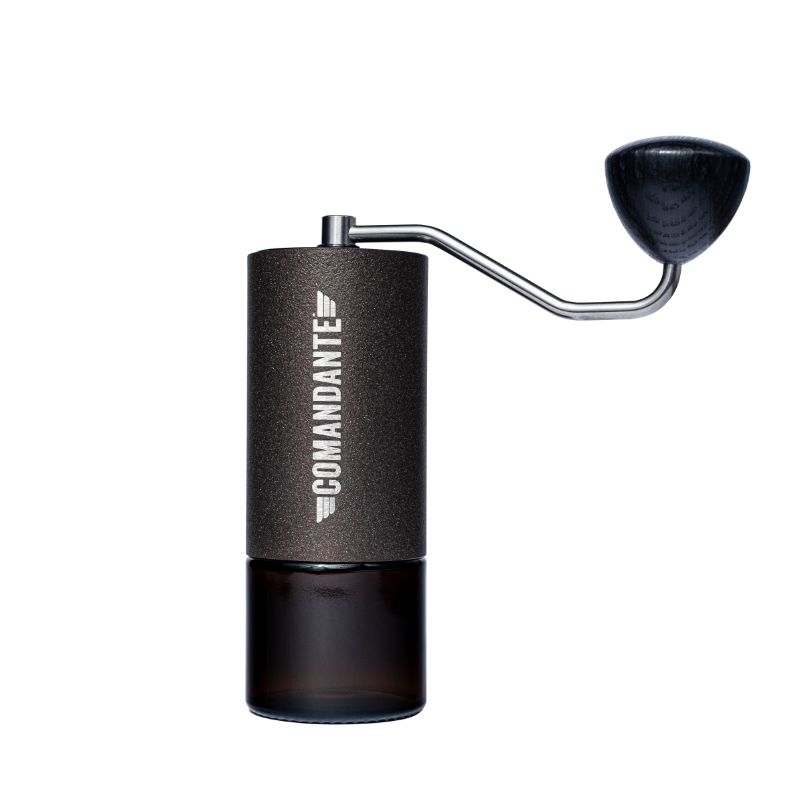
Manual (hand) grinders
No electricity, silent, and genuinely portable — a good premium hand grinder like the Comandante C40 can match the consistency of entry-to-mid-range electric grinders. The trade-off is physical effort: expect roughly 1–3 minutes of hand-cranking per dose.
View hand grinders →

Electric grinders
Faster and more convenient for daily use, particularly if you're grinding multiple doses back-to-back or making drinks for more than one person each morning. Most home baristas settle on electric once grinding twice a day becomes routine.
View electric grinders →
5. Matching a grinder to your brew method
| Brew method |
Grind size |
Notes |
| Espresso |
Fine |
Needs a burr grinder with stepless or micro-stepped adjustment for precise dialling-in |
| Pour over, drip, AeroPress |
Medium |
A burr grinder is strongly recommended for even extraction |
| French press, cold brew |
Coarse |
Most burr grinders handle this comfortably; the forgiving grind size is where a blade grinder is least likely to cause problems |
Ready to choose your grinder?
Browse the full range, or get in touch if you'd like help matching a grinder to your brew method.
Shop Grinders Contact Us
6. Frequently asked questions
Is a blade grinder ever okay to use?
For occasional drip coffee, a blade grinder can be acceptable if you're not chasing precise results. For espresso specifically, the uneven particle size makes consistent extraction very difficult, so a burr grinder is strongly recommended.
What's the difference between stepped and stepless adjustment?
Stepped grinders have fixed click positions — easy to return to a known setting. Stepless grinders allow infinite micrometric adjustment for finer control, at the cost of it being harder to return to an exact previous setting without tracking it yourself.
Can a hand grinder really match an electric grinder for espresso?
A premium hand grinder can match the consistency of entry-to-mid-range electric grinders, yes. What you're trading isn't grind quality so much as speed and convenience — hand-cranking a dose takes a minute or more of physical effort each time.
Do I need a different grinder for espresso vs. filter coffee?
Not necessarily a different grinder — many burr grinders adjust across the full range from fine espresso through to coarse French press. What matters is that whichever grinder you choose covers the grind range your brew method needs.
MD
About the author
Mik Di Pacci
Founder & CEO, Di Pacci Coffee Company
Mik Di Pacci founded Di Pacci Coffee Company in 2010, starting with a single coffee cart in Marrickville, Sydney and growing it into a specialist coffee-machine and grinder business that now serves customers across Australia, New Zealand and beyond. He has spent more than two decades in coffee — roasting, servicing equipment and helping home baristas and cafés choose the right gear. For advice on the right grinder for your setup, explore our home grinder range or call the Di Pacci NZ team on 09 9779924.