Espresso Machine vs Coffee Machine: What's the Difference?

Buying Guides Β· Coffee Machine Basics

"Coffee machine" gets used as a catch-all term, but it can mean genuinely different pieces of equipment depending on who's saying it. This guide clears up the real difference between an espresso machine and a filter/drip coffee machine, plus where automatic bean-to-cup machines fit into the picture.

PressureHow espresso is made
GravityHow filter coffee is made
~9 barTypical espresso brew pressure
92–96Β°CTypical filter brew temperature

1. The core difference: pressure vs. gravity

The real distinction isn't about brand or price β€” it's about how water meets the coffee. An espresso machine forces hot water through finely-ground, tightly-packed coffee under high pressure, extracting a small, concentrated shot with crema on top. A filter or drip coffee machine lets hot water pass through coarser grounds by gravity alone, producing a larger, less concentrated brew with no crema. Everything else β€” the milk drinks you can make, the grind size you need, the machine's footprint β€” follows from that one difference.

2. Espresso machines

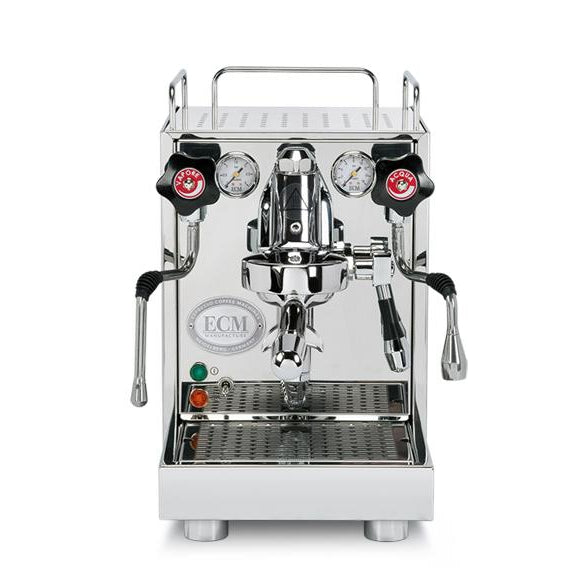
ECM Mechanika V Slim espresso machine

Pressure-brewed espresso

Machines like the ECM Mechanika V Slim use an internal pump to force water through the portafilter at pressure. This is the base for espresso, flat whites, lattes, cappuccinos, and long blacks.

View espresso machines β†’

Espresso machines need a fine, consistent grind to work properly, which is why a good burr grinder matters just as much as the machine itself. Manual and semi-automatic espresso machines also give you a built-in steam wand for texturing milk β€” browse our milk frothing options if you'd rather not rely on the wand.

3. Filter / drip coffee machines

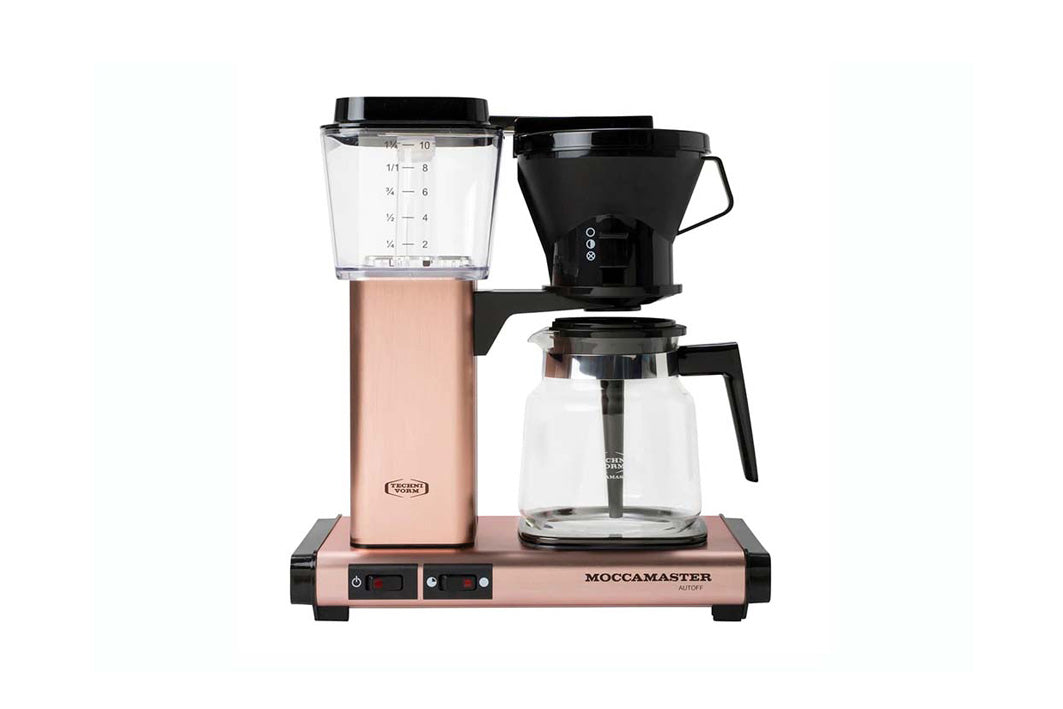
Moccamaster Classic filter coffee maker

Gravity-brewed filter coffee

Machines like the Moccamaster Classic brew by letting hot water drip through coarser grounds into a carafe below β€” no pump, no pressure, no crema. Moccamaster's own published specs put their brew temperature at 92–96Β°C over a 4–6 minute cycle, backed by a 5-year manufacturer warranty.

View filter coffee makers β†’

This style suits people who want a full pot rather than a single shot, and who prefer a cleaner, less concentrated cup. It won't produce espresso-based drinks like a flat white or cappuccino on its own β€” those need pressure brewing. Filter machines also tend to brew larger batches in one cycle, which suits a household with several coffee drinkers better than pulling shots one at a time.

4. Where automatic and bean-to-cup machines fit

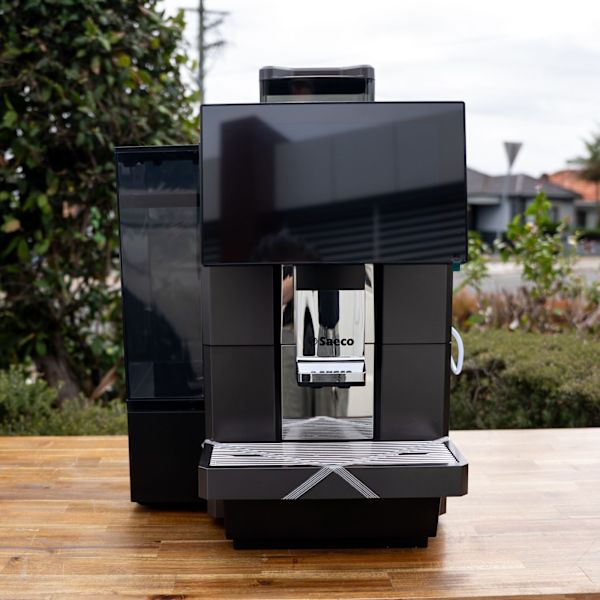
Saeco SE180 automatic bean-to-cup machine

Automated espresso, not a third category

Machines like the Saeco SE180 are actually espresso machines under the hood β€” they still force pressurised water through ground coffee β€” but automate the grinding, dosing, and often the milk texturing, so the whole process happens at the press of a button.

View automatic machines β†’

So when someone says "coffee machine" and means one of these, they're really talking about an espresso machine with the technique automated β€” not the gravity-brewed style covered in the previous section. Worth clarifying with whoever you're talking to, since the two get conflated constantly.

● Tip: If you're not sure which category a machine you're looking at falls into, check whether it has a portafilter (espresso-style) or a basket that sits above a carafe (filter-style) β€” that's usually the fastest visual tell.

5. Cleaning and upkeep

Maintenance is one of the more overlooked differences between the two. Espresso machines have more to look after β€” the portafilter, group head, and steam wand (if fitted) all need regular cleaning, and the internal boiler needs periodic descaling to prevent scale buildup affecting temperature and pressure. Filter coffee machines are simpler: rinse the filter basket and carafe after each use, and run a periodic cleaning cycle through the water reservoir. If low-maintenance matters as much as the coffee style itself, that's worth weighing alongside everything else here.

6. Which one should you buy?

You want… Best fit
Espresso, flat whites, lattes, cappuccinos Espresso machine (manual, semi-auto, or automatic)
A full pot of filter coffee, minimal fuss Filter / drip coffee machine
Espresso-style drinks with zero manual technique Automatic / bean-to-cup machine
Both filter coffee and espresso drinks in one household Consider owning one of each rather than compromising on a single machine

Not sure which is right for you?

Browse the full range, or get in touch and we'll help you match a machine to how you actually drink coffee.

Shop Espresso Machines Shop Filter Coffee Makers

7. Frequently asked questions

Is a "coffee machine" the same as an espresso machine?

Not necessarily β€” "coffee machine" is often used loosely to mean either an espresso machine or a filter/drip coffee maker. The two brew very differently: espresso uses pressure, filter coffee uses gravity. It's worth clarifying which one someone means.

Can I make a latte or cappuccino with a filter coffee machine?

No β€” lattes, cappuccinos, and flat whites are built on an espresso base, which requires pressure brewing. A filter/drip machine produces a different style of coffee entirely and can't replicate espresso-based drinks.

Do bean-to-cup machines count as espresso machines?

Yes β€” automatic and bean-to-cup machines still force pressurised water through ground coffee, the same fundamental process as a manual espresso machine. They just automate the grinding, dosing, and often the milk steaming.

Which type produces stronger coffee?

Espresso is more concentrated per millilitre, but a full cup of filter coffee often contains more total caffeine than a single espresso shot simply because of the larger volume. "Stronger" depends on whether you mean intensity or total caffeine content.

MD

About the author

Mik Di Pacci

Founder & CEO, Di Pacci Coffee Company

Mik Di Pacci founded Di Pacci Coffee Company in 2003, starting with a single coffee cart in Marrickville, Sydney and growing it into a specialist coffee-machine and grinder business that now serves customers across Australia, New Zealand and beyond. He has spent more than two decades in coffee β€” roasting, servicing equipment and helping home baristas and cafΓ©s choose the right gear. For advice on the right machine for your setup, explore our home coffee machine range or call the Di Pacci NZ team on 09 9779924.