


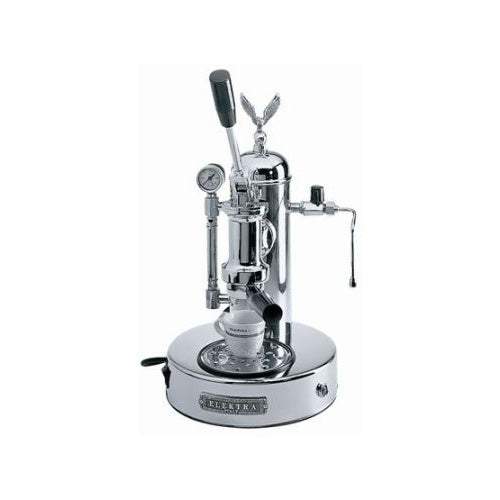
Manual & lever machines
The most hands-on option — you control pressure and timing directly, often via a spring or manual piston lever. Rewarding for hobbyists who want to learn extraction from first principles, but with a real learning curve.


Buying Guides · Home Coffee Machines
Buying your first — or fifth — home coffee machine can feel overwhelming once you start comparing boiler types, portafilter sizes, and price tiers. This guide breaks down the main types of home machines, the features actually worth paying attention to, and how to think about budget, so you can choose something that matches how you'll really use it.
The "best" coffee machine isn't the most expensive one — it's the one that matches your routine. Someone who wants to fully control every variable of a shot has very different needs from someone who wants a one-touch flat white before work. Getting this match right matters more than any single spec, because the machine you'll actually use consistently beats the one that impresses on paper but sits unused after the novelty wears off.
It's also worth knowing upfront: your grinder has just as much influence on your cup as your machine does. We'll come back to that in the last section, but keep it in mind as you budget.
The most hands-on option — you control pressure and timing directly, often via a spring or manual piston lever. Rewarding for hobbyists who want to learn extraction from first principles, but with a real learning curve.
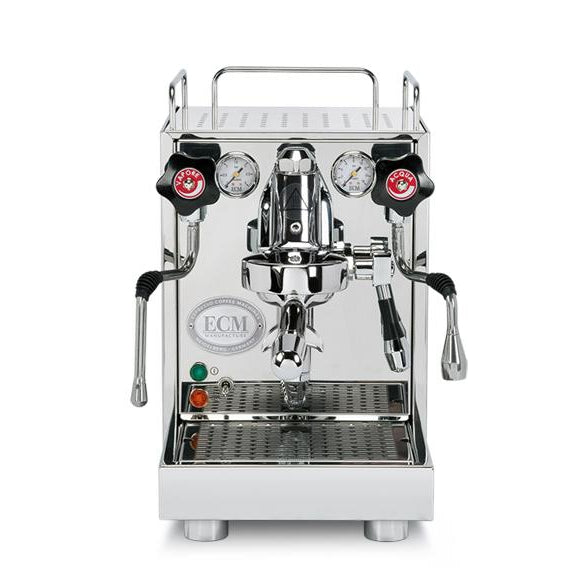
The most common home category. An electric pump handles pressure, while you control shot timing. This covers everything from simple single-boiler machines through to dual-boiler prosumer setups.
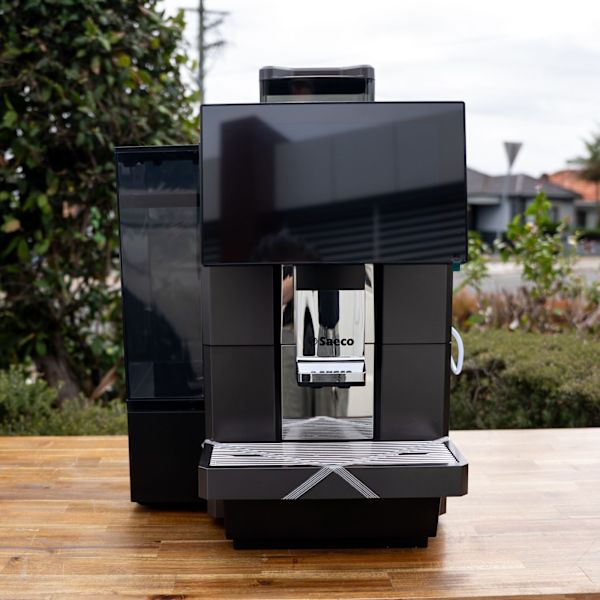
One-touch operation with a built-in grinder and often automated milk texturing. Trades some control for convenience and consistency — a strong fit for busy households or shared office kitchens.
Our full range spans all three categories — browse home coffee machines for manual and semi-automatic models, or automatic and bean-to-cup machines if one-touch convenience matters more to you than hands-on control.
| You are… | Likely best fit | Why |
|---|---|---|
| New to espresso, want to learn properly | Semi-automatic, single boiler | Full control at a manageable learning curve |
| Making multiple drinks back-to-back | Dual boiler, semi-automatic | Brew and steam simultaneously without waiting |
| A hands-on hobbyist who enjoys the craft | Manual or lever machine | Direct control over every part of the shot |
| After convenience over control | Automatic / bean-to-cup | One-touch drinks, grinder built in |
| Buying for a shared office or family kitchen | Automatic / bean-to-cup | Consistent results without a learning curve for every user |
Single boiler machines brew and steam one at a time. Heat exchanger and dual boiler machines can do both simultaneously — dual boiler generally offers the most stable, independent temperature control for each.
A PID keeps brew temperature stable within a narrow range, which means more consistent extraction shot to shot — especially useful once you're trying to dial in a specific bean.
The commercial-standard size, used across most cafe equipment. A 58mm portafilter gives you access to the widest range of baskets, tampers, and accessories if you want to upgrade parts over time.
Manual wands give full control over milk texture once you've learned the technique. Automatic or semi-automatic wands trade some of that control for consistency and speed.
Rather than fixed price points — which shift over time — it's more useful to think in tiers of capability:
Single-boiler semi-automatic machines. Great for learning the fundamentals of espresso and steaming milk, with fewer features to dial in.
Heat exchanger or dual boiler machines, often with PID control. This is where shot-to-shot consistency really improves.
Commercial-grade components brought into the home — saturated group heads, precise temperature stability, and build quality intended to last years of daily use.
See our current range across home coffee machines, including brands like Rancilio, Lelit, La Marzocco, Rocket, ECM, Profitec, Isomac, and Quick Mill spanning entry-level through to professional-grade equipment.
Fresh, consistent grinding shapes your extraction more than almost any other factor — a burr grinder paired with a modest machine will consistently out-brew an expensive machine fed by a blade grinder or stale pre-ground coffee. If you're planning your budget, it's worth deciding on your grinder alongside your machine rather than as an afterthought.
Browse our home coffee grinder range, spanning manual hand grinders through to precision electric burr grinders, and pair it with fresh coffee beans to get the most out of whichever machine you choose.
Browse the full range, or get in touch if you'd like help matching a machine to how you actually make coffee.
Shop Home Machines Contact UsSemi-automatic machines use an electric pump for pressure but leave shot timing and (usually) grinding to you. Automatic and bean-to-cup machines handle grinding, dosing, and often milk texturing at the press of a button, trading some control for convenience.
Not necessarily. A dual boiler is most valuable if you're regularly brewing and steaming milk back-to-back and want stable, independent temperature control for each. If you're mostly making one drink at a time, a single boiler or heat exchanger machine may suit you just as well.
Yes, particularly for households or offices where convenience and consistency matter more than hands-on control. You give up some of the customisation a manual or semi-automatic machine offers, in exchange for one-touch simplicity.
There's no fixed rule, but it's worth resisting the temptation to spend everything on the machine. A quality burr grinder has a bigger impact on your cup than most people expect — it's often better to choose a slightly more modest machine and a genuinely good grinder than the reverse.