You controlSemi-automatic: timing & dosing
One buttonFully automatic: grind to cup
SeparateSemi-auto needs its own grinder
Built-inFully auto grinds internally
1. What the terms actually mean
Semi-automatic means the machine's pump handles water pressure for you, but you control when the shot starts and stops, and — on most models — you grind and dose the coffee yourself using a separate grinder. Fully automatic (also called bean-to-cup) means the machine grinds, doses, tamps, and brews on its own at the press of a button, often texturing milk automatically too. Both are genuinely espresso machines under the hood — the difference is how much of the process is left in your hands.
There's a third category worth knowing about too — fully manual lever machines, which put you in control of pressure itself rather than just timing. They're a smaller, more hands-on niche than either category here; our coffee machine buying guide covers where they fit in.
2. Semi-automatic vs. fully automatic

Semi-automatic
Machines like the Quick Mill Pippa put you in control of shot timing and extraction, using coffee you've ground and dosed yourself. This means pairing it with a proper burr grinder — the machine alone doesn't grind. Factor the grinder into your total spend from the start; it's not an optional extra, it's half the setup.
View semi-automatic machines →
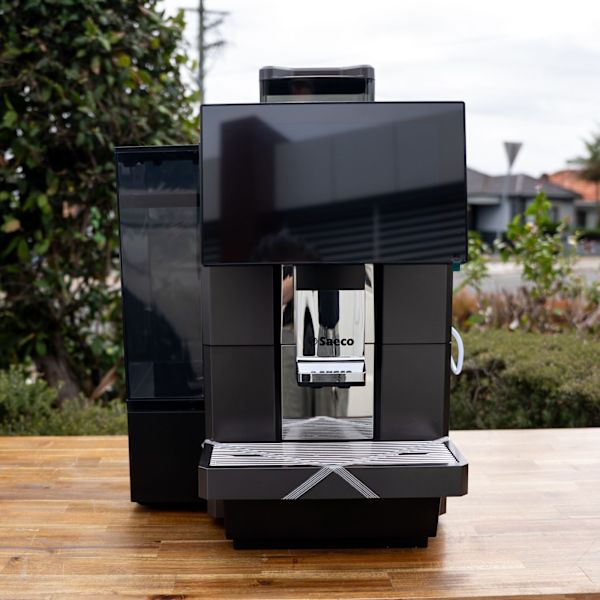
Fully automatic (bean-to-cup)
Machines like the Saeco SE180 handle grinding, dosing, and brewing internally — beans go in the hopper, a drink comes out the other end, with no separate grinder or manual technique required. The trade-off is less room to fine-tune any single variable once you're past the machine's built-in settings.
View fully automatic machines →
● Tip: If you're drawn to a semi-automatic machine but not to the idea of manually grinding and dosing every shot, budget for a decent grinder as part of the purchase — it has as much impact on your cup as the machine itself.
3. Key differences at a glance
|
Semi-automatic |
Fully automatic |
| Grinder included? |
No — needs a separate grinder |
Yes — built in |
| Control over the shot |
High — you control timing and dosing |
Low — the machine handles it |
| Learning curve |
Moderate — takes practice to dial in |
Minimal — consistent from the first use |
| Milk texturing |
Manual steam wand (on most models) |
Often automated |
| Cleaning & maintenance |
Manual portafilter cleaning, backflushing |
Often has automated cleaning cycles |
4. Which is right for you?
Choose semi-automatic if…
You enjoy the process as much as the result, want full control over each variable, and don't mind investing time in learning technique and dialling in a grinder.
Choose fully automatic if…
You want consistent, cafe-style drinks with minimal effort — especially useful for busy households, shared office kitchens, or anyone who just wants their coffee without the ritual.
You're upgrading from a pod machine
A fully automatic machine is usually the more comfortable next step — the button-press workflow will feel familiar, just with real beans and noticeably better coffee.
You've already got a grinder you like
A semi-automatic machine makes more sense — you'd otherwise be paying for a built-in grinder inside a fully automatic machine that duplicates what you already own.
5. Signs you've picked the wrong one
You bought semi-automatic but never adjust anything
If you're running the same settings every time and have no interest in changing them, you're paying for control you're not using — a fully automatic machine would get you the same daily result with less effort.
You bought fully automatic but keep wanting more
If you find yourself frustrated by the limits of the built-in settings and wishing you could adjust grind size or extraction time more precisely, that's a sign you'd get more satisfaction from a semi-automatic setup.
6. Frequently asked questions
Does a semi-automatic machine come with a grinder?
Generally no — most semi-automatic espresso machines are sold on their own, and you'll need to pair them with a separate burr grinder to get a consistent, fresh grind for each shot.
Is a fully automatic machine easier to maintain?
Often, yes — many fully automatic machines include automated cleaning cycles for the brew group and milk system. Semi-automatic machines require more manual upkeep, like backflushing the group head and cleaning the portafilter by hand.
Can a semi-automatic machine make coffee as good as a fully automatic one?
Yes, and often better once you've developed the technique — semi-automatic machines give you more control over every variable in the shot. The trade-off is that quality depends on your skill and consistency, whereas a fully automatic machine delivers the same result every time regardless of who's using it.
Which is better for a shared household?
Fully automatic machines tend to suit shared households better, since anyone can get a consistent result without learning technique. A semi-automatic machine works well too if everyone in the household is happy to learn, or if one person is doing most of the brewing.
MD
About the author
Mik Di Pacci
Founder & CEO, Di Pacci Coffee Company
Mik Di Pacci founded Di Pacci Coffee Company in 2010, starting with a single coffee cart in Marrickville, Sydney and growing it into a specialist coffee-machine and grinder business that now serves customers across Australia, New Zealand and beyond. He has spent more than two decades in coffee — roasting, servicing equipment and helping home baristas and cafés choose the right gear. For advice on the right machine for your setup, explore our home coffee machine range or call the Di Pacci NZ team on 09 9779924.