1. What makes cold brew different
Cold brew steeps coarsely ground coffee in room-temperature or cold water for an extended period — anywhere from several hours to overnight — rather than using hot water and pressure. That slow, cold extraction pulls through different compounds than hot brewing does, producing coffee that's naturally smoother and noticeably lower in acidity, without the bitterness that can come from over-extraction. It's typically brewed as a concentrate and diluted to taste, whether served over ice, warmed up, or used as the base for milk-forward drinks.
There are two main ways to make it at home: full immersion, where grounds sit steeping directly in water, and slow drip, where water drips through a bed of grounds over several hours. Pair either with a home grinder set to a coarse grind for the best results.
2. Immersion brewing (Toddy)
Immersion brewing is the simplest method: coarse grounds steep fully submerged in cold water for 12–24 hours, then the concentrate is filtered out through a felt or paper filter. It's forgiving, low-maintenance, and produces a strong, smooth concentrate that keeps well in the fridge.
⭐ Simplest way to start
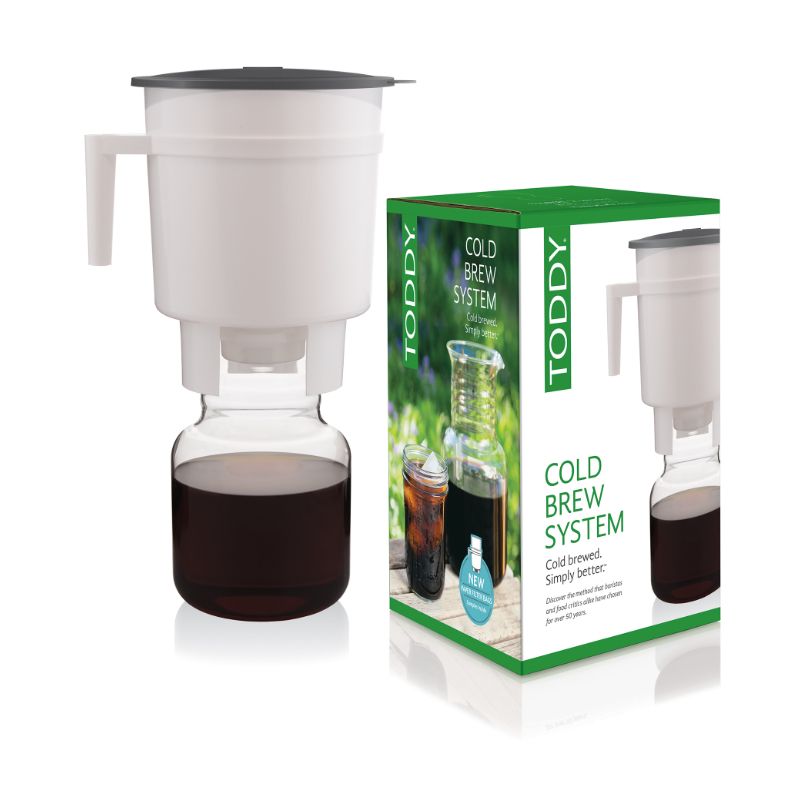
Toddy Domestic Cold Brew Coffee Maker
Immersion brewing · Reusable felt filter · Glass decanter · Makes concentrate
An immersion system that steeps grounds in a large brewing container, then releases the concentrate through a felt filter into a glass decanter via a spigot. Toddy states its process reduces acidity by around 67% compared to traditional hot brewing — the manufacturer's own figure, not independently tested by us, but consistent with the broadly lower acidity cold brew is known for. Also works for cold-brewing tea.
✓ Strengths
- Very simple, hands-off process
- Produces a strong, smooth concentrate that keeps for weeks
- Reusable filter, minimal ongoing cost
⚠ Consider
- Takes up more counter or fridge space than a drip tower
- Long steep time — plan ahead (start it the night before)
Best for: anyone brewing regular batches of concentrate to keep on hand, or wanting the lowest-effort method. A Commercial Toddy system with Lift is also available for higher-volume cafe use.
View product →
3. Drip tower brewing (Bruer, Yama)
Drip towers work differently: water drips slowly, drop by drop, through a bed of grounds and into a collection vessel below, typically over 3–8 hours. It's a more visual, hands-on process than immersion, and the slower, more controlled extraction can bring out more nuanced flavour from the specific bean you're using.
⭐ Slow-drip, more control
Cold Bruer Cold Brew System
Slow-drip tower · Adjustable valve · Up to 20 fl oz per batch · Includes 100 paper filters
A three-level drip tower — water sits on top, grounds in the middle, and coffee collects in the chamber below. An adjustable valve controls the drip rate, letting you dial in extraction time and strength. A full batch takes around four hours, and the finished cold brew keeps in the fridge for up to two weeks.
✓ Strengths
- Adjustable drip rate for controlling strength and extraction
- Faster than most immersion methods (~4 hours)
- Visually appealing, clean glass design
⚠ Consider
- Requires paper filters (included, but a recurring consumable)
- More setup steps than immersion brewing
Best for: those who enjoy the process and want more control over extraction than a set-and-forget immersion brewer offers. A Yama glass drip tower (6–8 cup, 32oz) is also available for a similar slow-drip experience.
View product →
Not sure which method suits your routine?
Our team can talk you through immersion and drip-tower brewing based on how much cold brew you go through and how hands-on you want the process to be.
Shop Cold Brew Gear Get Expert Advice
4. Quick comparison
| Method |
Brew time |
Effort |
Best for |
|
| Immersion (Toddy) |
12–24 hrs |
Low — set and forget |
Regular batches, minimal effort |
View → |
| Drip tower (Bruer) |
~4 hrs |
Moderate — adjustable valve |
Faster brew, more control over extraction |
View → |
5. How to brew a clean batch
Whichever method you choose, a few fundamentals make the difference between a clean, well-balanced cold brew and a muddy or over-extracted one:
-
Grind coarse. A grind that's too fine will over-extract during the long steep and turn bitter, and will also make filtering harder. If you're new to grinding for cold brew, start coarser than you'd use for a French press.
-
Get the ratio right. Cold brew concentrate is typically made at a strong ratio (roughly 1:4 to 1:8 coffee to water) and diluted at serving time — don't drink it straight unless you like it very strong.
-
Filter thoroughly. Whether it's the felt filter in a Toddy or the paper filters in a Bruer, make sure the concentrate runs clear of sediment before storing it.
-
Be patient. Rushing the steep or drip time is the most common way to end up with thin, underdeveloped flavour. Start your batch the night before you need it.
Beans to try: cold brew tends to flatter beans with naturally sweet, chocolatey, or nutty notes, since the cold extraction softens brighter acidity. Browse our
coffee beans range to find a blend that suits your taste.
6. Serving and storing your cold brew
Cold brew concentrate keeps in the fridge for up to two weeks in a sealed container — refrigerate it as soon as it's filtered. To serve, dilute with water, milk, or a milk alternative to taste (start around 1:1 and adjust from there), and pour over ice. It also works well warmed gently on the stove if you'd prefer it hot, or as the base for cold lattes and other milk-forward drinks.
7. Frequently asked questions
What's the difference between cold brew and iced coffee?
Iced coffee is usually hot-brewed coffee cooled down and poured over ice. Cold brew is brewed cold from the start, using an extended steep or slow drip rather than heat, which produces a smoother, lower-acidity result.
Is cold brew really lower in acidity?
Yes — cold extraction is well established as producing lower-acidity coffee than hot brewing. Toddy states its specific process reduces acidity by around 67% compared to traditional hot brewing; that figure is the manufacturer's own claim rather than something we've independently tested, but it's consistent with cold brew's generally recognised lower acidity.
How long does cold brew concentrate keep?
Properly filtered and refrigerated in a sealed container, cold brew concentrate typically keeps for up to two weeks.
Which is better — immersion or drip tower brewing?
Neither is strictly "better" — they suit different routines. Immersion (Toddy) is simpler and more hands-off, ideal for regular batches with minimal effort. Drip towers (Bruer, Yama) are faster and give you more control over extraction via an adjustable drip rate, but involve a few more steps.
Can I use any coffee bean for cold brew?
Yes, though beans with naturally sweet, chocolatey, or nutty notes tend to shine, since cold extraction softens brighter acidic notes that some beans are prized for when hot-brewed.
MD
About the Author Mik Di Pacci Founder & CEO, Di Pacci Coffee Company
Mik Di Pacci founded Di Pacci Coffee Company in 2010, starting with a single coffee cart in Marrickville, Sydney, and growing it into a specialist coffee-machine and grinder business that now serves customers across Australia, New Zealand, and beyond. He has spent more than two decades in coffee — roasting, servicing equipment, and helping home baristas and cafes choose the right gear. For advice on rounding out your setup, explore our accessories range or call the Di Pacci NZ team on 09 9779924.