4Essentials covered
58mmCommercial-standard tamper size
0.1gUseful scale accuracy for dosing
Skip itEverything else, until you need it
1. Why "accessories" doesn't mean "extras"
It's easy to treat accessories as optional add-ons once you've spent on the machine and grinder. In practice, a handful of them directly affect the quality of your coffee or how sustainable your daily routine is — they're not upsells, they're part of the setup working properly. The rest genuinely can wait.
2. The four essentials
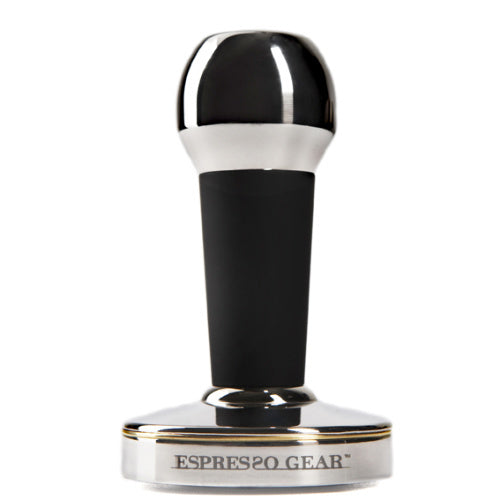
A properly-sized tamper
Even, level tamping prevents channelling — water finding the path of least resistance through your puck instead of extracting evenly. The size has to match your portafilter: 58mm is the commercial standard, but home machines often use 51mm, 53mm, or 54mm. Check your machine before buying — a tamper even a millimetre too small won't seal against the basket wall, and coffee will channel around the edges no matter how carefully you press.
How to tell it's wrong: if your shots run unevenly fast on one side of the puck, or you see a gap between the tamped coffee and the basket wall when you check, the tamper is either the wrong size or you're not applying even pressure.
View tampers →

A knock box
A dedicated place to knock out spent pucks keeps grounds out of your sink and off your counter, and protects your portafilter from the wear of being knocked against a hard edge. A compact home-sized box is plenty if you're only pulling a few shots a day — home users typically need something holding 10–20 spent pucks before emptying, well short of the 50-100+ capacity busy cafes need.
Worth knowing: never knock the portafilter against your sink or bin edge directly — it dents the rim over time and can eventually affect the seal against the group head.
View knock boxes →

A milk pitcher
If you're making any milk drinks at all, a proper pitcher with a pointed spout makes texturing and pouring far more controllable than an ad-hoc jug. A 350–450ml size covers single drinks comfortably for home use; step up to 600ml+ only if you're regularly steaming for more than one drink at once.
Pairing tip: stainless steel gives you the option of judging milk temperature by touch through the jug wall once you've built up the experience — a genuine skill worth developing even if you start out using a thermometer.
View milk pitchers →

A scale
Dosing by weight rather than guesswork is the single easiest way to get repeatable shots — and to actually diagnose what's going wrong when a shot tastes off. Look for 0.1g accuracy if you're weighing espresso doses specifically; volume measurements are unreliable since grind size and bean density both affect how much coffee fits in a given space.
Minimum spec: fast response time matters as much as accuracy — a scale that lags behind a fast-pouring shot makes it hard to catch your yield at the right moment.
View scales →
● Tip: If you're weighing up where to spend first, prioritise the scale and the correctly-sized tamper — both directly affect extraction quality. The knock box and pitcher are about workflow and convenience rather than the coffee itself.
Two other things worth having in place, though we've covered them properly elsewhere rather than repeating it here: a milk frothing setup suited to how you actually drink coffee, and a regular descaling routine to protect the machine long-term.
2b. Worth adding once you're hooked
These two aren't essential on day one, but they're the natural next purchases once you're dialling in shots regularly and start noticing inconsistency you can't explain.

A WDT tool
A WDT (Weiss Distribution Technique) tool uses fine needles to break up clumps in the puck before tamping, which helps water extract evenly instead of finding channels through compacted clusters of grounds. Cheap, small, and a genuine upgrade once you've noticed inconsistent shots despite a good tamp.
View dosing tools →

A milk thermometer
Milk steamed below 60°C lacks proper texture and warmth; above 70°C the proteins denature and it develops a scalded, burnt flavour. A clip-on thermometer removes the guesswork while you're still learning to judge temperature by touch and sound.
View thermometers →
3. What you probably don't need starting out
Automatic tampers
Genuinely useful in a busy commercial setting doing dozens of shots a day. For home use, a manual tamper does the job just as well.
Milk jug rinsers
A nice-to-have for a shared commercial bar juggling multiple milk types constantly. At home, rinsing a single pitcher under the tap takes seconds.
Elaborate storage systems
Dedicated bean canisters and organiser stations are pleasant but not essential — any airtight container keeps beans fresh just fine to start.
Multiple tamper mats and stations
Handy once you've settled into a routine, but not something you need to buy on day one alongside your first machine.
Ready to round out your setup?
Browse the full accessories range, or get in touch if you're not sure what your specific machine needs.
Shop Accessories Contact Us
4. Frequently asked questions
Do I really need a scale for home espresso?
You don't strictly need one to make coffee, but it's the fastest way to get consistent results and to diagnose issues — a shot that's too fast or slow is much easier to fix when you know your exact dose and yield rather than guessing.
What size tamper do I need?
It depends on your machine's portafilter — 58mm is the commercial standard, but many home machines use 51mm, 53mm, or 54mm baskets. Check your machine's specifications before buying, since the wrong size won't seal properly against the basket walls.
Is a knock box necessary or can I just use a bin?
A dedicated knock box isn't strictly necessary, but it protects your portafilter from the wear of being knocked against a hard bin edge, and keeps grounds contained rather than scattered. It's a small purchase that saves wear on more expensive equipment.
What milk pitcher size should I buy?
For home use making one or two drinks at a time, 350–450ml is the most practical size. Larger 600ml+ pitchers make more sense if you're regularly steaming milk for several drinks in one go.
MD
About the author
Mik Di Pacci
Founder & CEO, Di Pacci Coffee Company
Mik Di Pacci founded Di Pacci Coffee Company in 2010, starting with a single coffee cart in Marrickville, Sydney and growing it into a specialist coffee-machine and grinder business that now serves customers across Australia, New Zealand and beyond. He has spent more than two decades in coffee — roasting, servicing equipment and helping home baristas and cafés choose the right gear. For advice on rounding out your setup, explore our accessories range or call the Di Pacci NZ team on 09 9779924.