Brewing Guides · Coffee at Home
By Mik Di Pacci, Founder & CEO, Di Pacci Coffee Company
Not every good cup of coffee comes from an espresso machine. Iced coffee, cold brew, and pour over are three of the most popular alternative brewing methods — and despite what the names suggest, they're not interchangeable. This guide covers how each one actually works, the real difference between iced coffee and cold brew (a common mix-up), and which method suits your routine. Prefer a French press? See our plunger coffee guide for that method specifically.
Iced coffeeHot-brewed, served cold — quick
Cold brewSteeped cold for hours — smooth, low-acid
Pour overManual, hot — full control over the cup
Not the sameIced coffee ≠ cold brew, despite the mix-up
1. Iced coffee vs cold brew: the actual difference
These two get used interchangeably, but they're genuinely different drinks made two different ways. Iced coffee starts as regular hot-brewed coffee — espresso, drip, or pour over — that's then cooled and poured over ice. Because it's brewed hot, it carries the same acidity and brightness as a normal cup, and needs to be brewed stronger than usual since melting ice will dilute it. Cold brew is never brewed hot at all — coarse coffee grounds steep in cold or room-temperature water for many hours, extracting flavour slowly without heat. The result is naturally smoother and lower in acidity, with a different flavour profile that tends toward chocolate and mellow fruit notes rather than the brighter, sharper notes hot brewing pulls out.
2. How to make iced coffee
The key to good iced coffee is brewing strong enough that melting ice doesn't leave you with a watery cup.
-
Brew double strength
Use roughly double your normal amount of coffee for the same volume of water — the ice will dilute it back down to a normal strength as it melts.
-
Brew hot, as usual
Use your regular method — espresso machine, pour over, or drip — there's no special brewing step here beyond the stronger ratio.
-
Cool before pouring over ice
Pouring hot coffee directly onto ice melts it fast and dilutes the cup unevenly. Let it cool slightly first, or use the flash-brew method below.
-
Flash-brew alternative
Brew pour over or drip coffee directly onto a bed of ice instead of into an empty vessel — the ice cools the coffee instantly as it drips through, locking in flavour before it can oxidise or turn bitter from sitting hot.
3. How to make cold brew
Cold brew comes in two common formats: immersion (steeping grounds directly in water) and cold drip (water slowly dripping through grounds over several hours) — both work, and the choice mostly comes down to equipment and how hands-off you want the process to be.
-
Use a coarse grind
Similar coarseness to a French press — too fine and you'll get excessive sediment and over-extraction during the long steep.
-
Immersion method: combine and wait
Mix coarse grounds with cold or room-temperature water at roughly a 1:8 ratio (adjust to taste), then leave to steep in the fridge or at room temperature for 12–24 hours.
-
Cold drip method: slow filtration instead
A cold drip tower slowly drips cold water through grounds over 3–12 hours, producing a cleaner, more delicate result than immersion — this is the traditional "Kyoto-style" cold drip format.
-
Filter and store
Strain out the grounds (a paper filter gives the cleanest result) and refrigerate. Cold brew concentrate keeps well refrigerated for up to two weeks.
-
Dilute to serve
Cold brew concentrate is usually stronger than a normal cup — dilute with water, milk, or ice to taste before drinking.
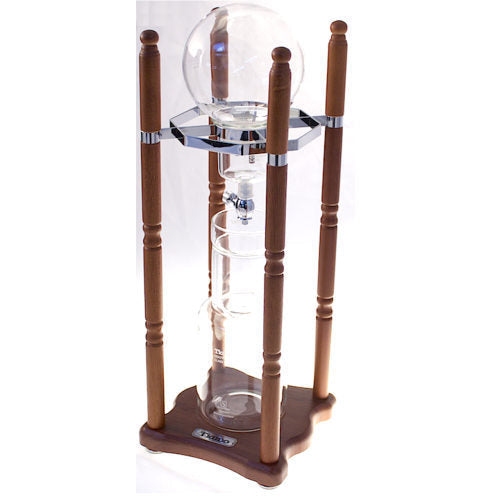
Tiamo Cold Drip Coffee Maker
A tempered-glass cold drip tower for the slow-drip method.
View product →
4. How to make pour over coffee
Pour over is a manual, hot-brewing method that gives you the most control over the final cup — worth the extra few minutes if you want to dial in flavour precisely.
-
Grind medium-fine
Finer than French press, coarser than espresso — roughly the texture of table salt.
-
Rinse the filter
Rinsing the paper filter with hot water before adding coffee removes any papery taste and preheats the dripper.
-
Bloom the grounds
Pour a small amount of hot water over the grounds first (about double their weight) and let it sit for 30–45 seconds — this releases trapped CO2 and improves even extraction for the rest of the pour.
-
Pour in slow, controlled stages
Pour the remaining water in a slow, circular motion over 2–4 minutes total, keeping the grounds evenly saturated rather than pouring it all at once.
-
Let it fully drain
Total brew time from bloom to the last drip is usually around 3–4 minutes for a standard-size cup.

Brewista Flat-V Dripper
A double-wall glass pour over dripper that stays cool to the touch.
View product →
Tip: An AeroPress can also make a strong, concentrated brew that works well as the base for iced coffee — its short brew time and fine-grind compatibility make it a fast way to get a strong concentrate without a full espresso setup.

AeroPress Coffee Maker
Compact, portable, and fast — a good option for a strong iced-coffee base.
View product →
5. Method comparison
| Method |
Brew time |
Temperature |
Flavour profile |
| Iced coffee |
Same as your usual hot brew |
Hot, then cooled |
Bright, same acidity as hot coffee |
| Cold brew (immersion) |
12–24 hours |
Cold throughout |
Smooth, low acid, chocolate/mellow notes |
| Cold brew (drip tower) |
3–12 hours |
Cold throughout |
Clean, delicate, similar profile to immersion |
| Pour over |
3–4 minutes |
Hot |
Bright, nuanced, highlights origin flavours |
6. Which method should you choose
If you want a quick, familiar-tasting iced drink, iced coffee is the simplest route — no new equipment needed, just a stronger brew and some ice. If you want something genuinely different — smoother, lower acid, and happy to sit in the fridge for later — cold brew is worth the wait, and a drip tower gives a more refined result than a jug if you brew it often. If you're after the best possible cup for drinking hot right now, with the most control over the outcome, pour over is the method to learn.
7. Frequently asked questions
What's the difference between iced coffee and cold brew?
Iced coffee is regular hot-brewed coffee that's cooled and served over ice, keeping the same acidity and brightness as a hot cup. Cold brew is steeped in cold water for many hours with no heat involved at all, producing a smoother, lower-acid result with a different flavour profile.
How long does cold brew last in the fridge?
Cold brew concentrate typically keeps well refrigerated for up to two weeks, though it's best enjoyed within the first week for peak flavour.
Can I use my espresso machine to make iced coffee?
Yes — pull a stronger shot or use more coffee than usual, then pour it over ice once slightly cooled. Espresso-based iced coffee is a common and quick option if you already have a machine.
What grind size should I use for pour over?
A medium-fine grind, roughly the texture of table salt — finer than French press, coarser than espresso.
Is cold brew stronger than regular coffee?
Cold brew concentrate is usually brewed stronger than a normal cup and is meant to be diluted with water, milk, or ice before drinking — undiluted, it can be significantly stronger than a standard brew.
Can I make cold brew without special equipment?
Yes — the immersion method just needs a jug or jar, a coarse grind, and a way to filter the grounds out afterwards (a fine strainer plus a paper filter works). A dedicated cold drip tower produces a more refined result but isn't required to get started.
MD
About the author
Mik Di Pacci
Founder & CEO, Di Pacci Coffee Company
Mik Di Pacci founded Di Pacci Coffee Company in 2010, starting with a single coffee cart in Marrickville, Sydney, and growing it into a specialist coffee-machine and grinder business that now serves customers across Australia, New Zealand, and beyond. He has spent more than two decades in coffee — roasting, servicing equipment, and helping home baristas and cafés choose the right gear. Browse our pour over tools or call the Di Pacci NZ team on 09 9779924.